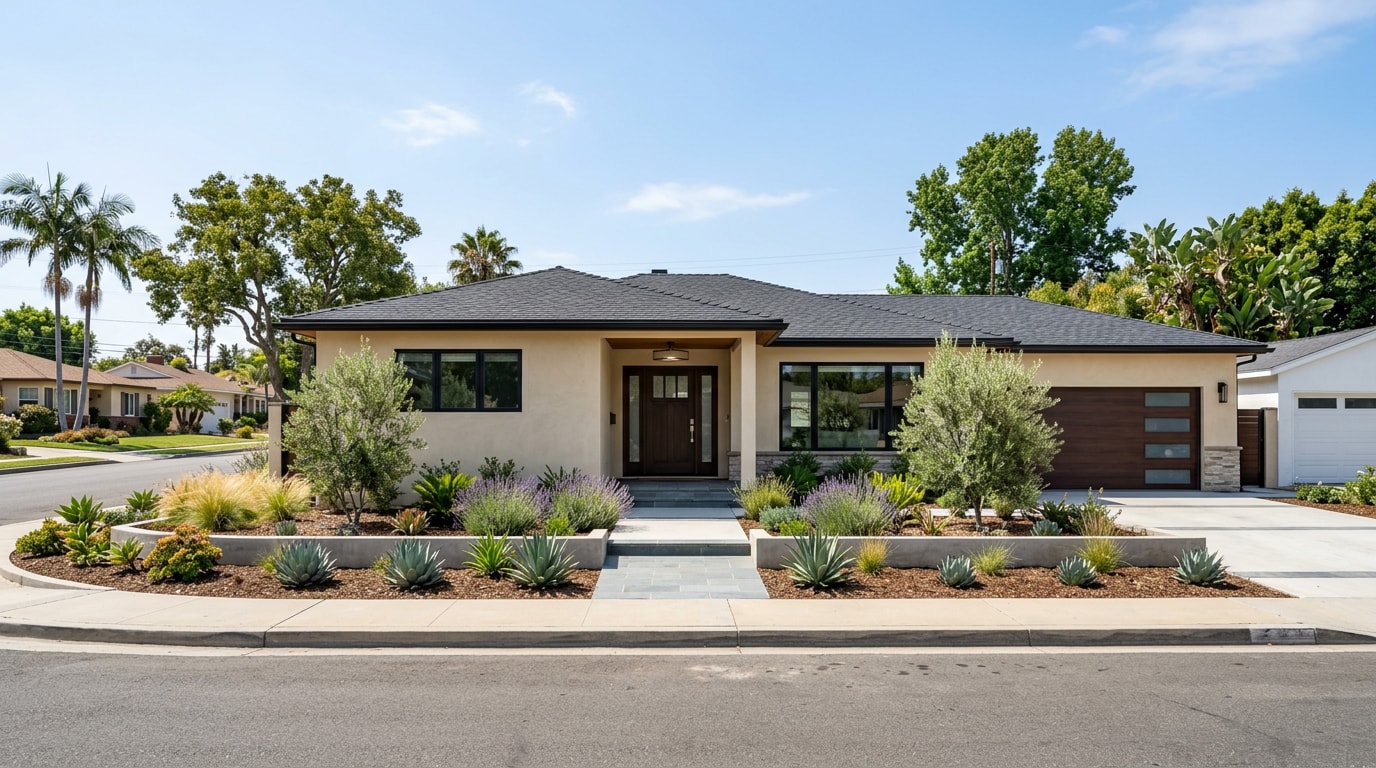
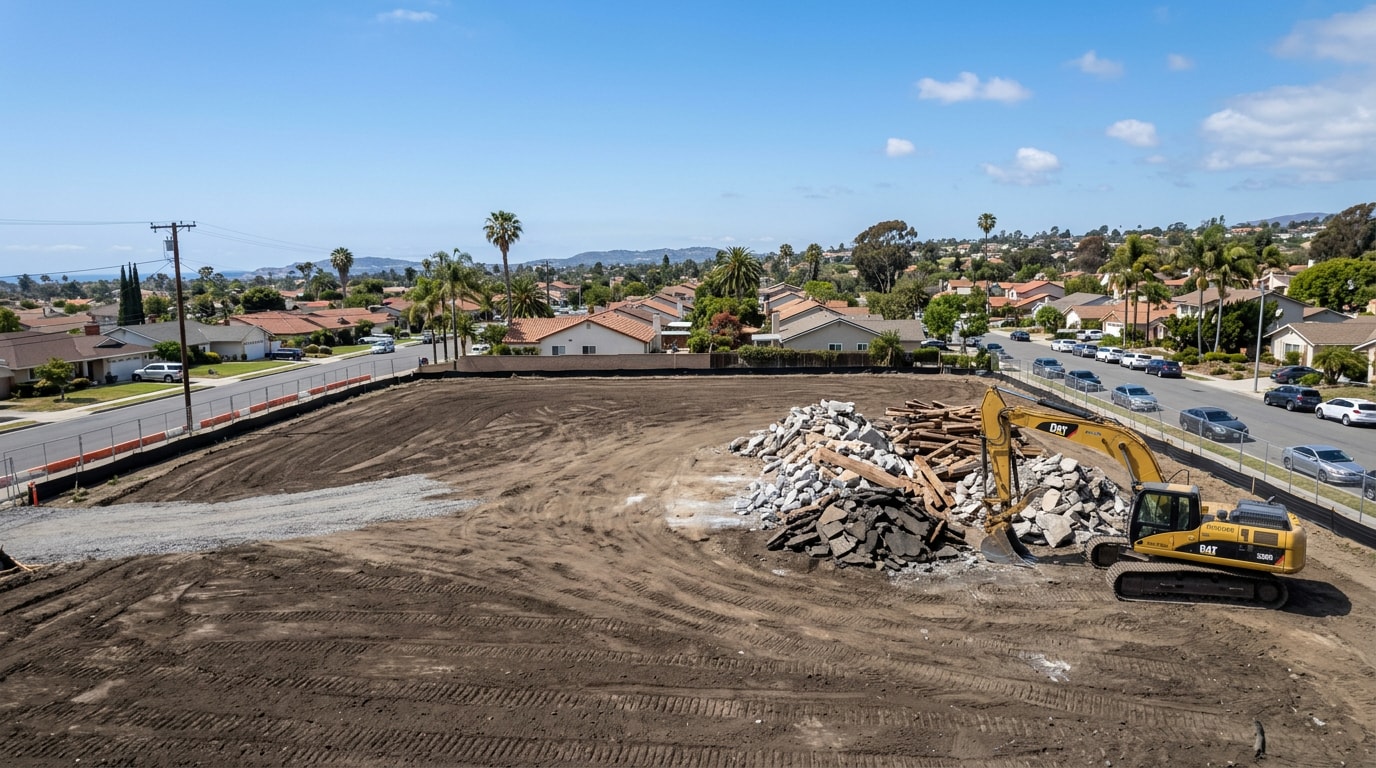
A building demolition contractor in Orange County, CA has to manage far more than knocking down walls. Permits, hazardous-material rules, and county debris-diversion requirements all shape the timeline before a single excavator shows up. This guide breaks down licensing, realistic costs, and the permit steps a property owner needs before signing a contract.
What a Licensed Demolition Contractor Should Have
Licensing is the baseline, not a bonus. California demolition work falls under specific CSLB classifications, and a contractor's paperwork should match the scope of your project.
- C-21 Building Moving/Demolition – the core classification for structural teardown work
- General Engineering (A) or General Building (B) – required for larger structural or site-wide projects
- ASB (asbestos) or HAZ (hazardous substance removal) certifications – needed when older buildings may contain regulated materials
A C-21 license is the standard classification demolition specialists carry in California, and firms that also hold general contracting licenses often list it alongside their primary classification.
Verify any license number directly through the CSLB license lookup tool before signing anything. The lookup shows status, bonding, and workers' comp in about two minutes, and it's free.
In our experience coordinating site-prep and teardown scopes across Orange County, the permit and utility-disconnect paperwork is almost always the longest lead item on a demolition schedule, not the physical teardown itself. Plan the timeline around that reality, not around how fast an excavator can work.
If demolition is the first step before a rebuild, pair it with the right follow-on scope. Builders Pathway handles site preparation and custom home building for Orange County property owners moving from teardown straight into new construction.
Building Demolition Costs in Orange County, CA
Demolition pricing depends on square footage, site access, disposal fees, and whether hazardous materials are present. The table below reflects typical ranges reported across Orange County residential and commercial projects. Always get a written, itemized quote for your specific site before budgeting.
| Project Type | Typical Cost Range | What's Usually Included |
|---|---|---|
| Interior / selective demolition | $2,000 – $8,000 | Wall removal, fixture removal, debris hauling |
| Residential structure demolition (1,000–1,500 sq ft) | $8,000 – $20,000 | Permit filing, teardown, foundation removal, haul-off |
| Whole-house demolition (larger or complex sites) | $20,000 – $35,000+ | Utility disconnect, grading, full site clearing |
| Commercial building demolition | $25,000 – $250,000+ | Hazmat survey, heavier equipment, longer permitting |
Tight lots, limited equipment access, or older homes with legacy building materials push costs toward the higher end of each range. A straightforward, open-site teardown with no hazardous materials tends to land near the lower end.
Ready to put a real number on your project? Get a free estimate instead of guessing from a table.
Types of Building Demolition Services
"Demolition" covers more ground than most people expect. A qualified Orange County demolition contractor typically breaks projects into three categories, each with its own equipment, permitting path, and crew.
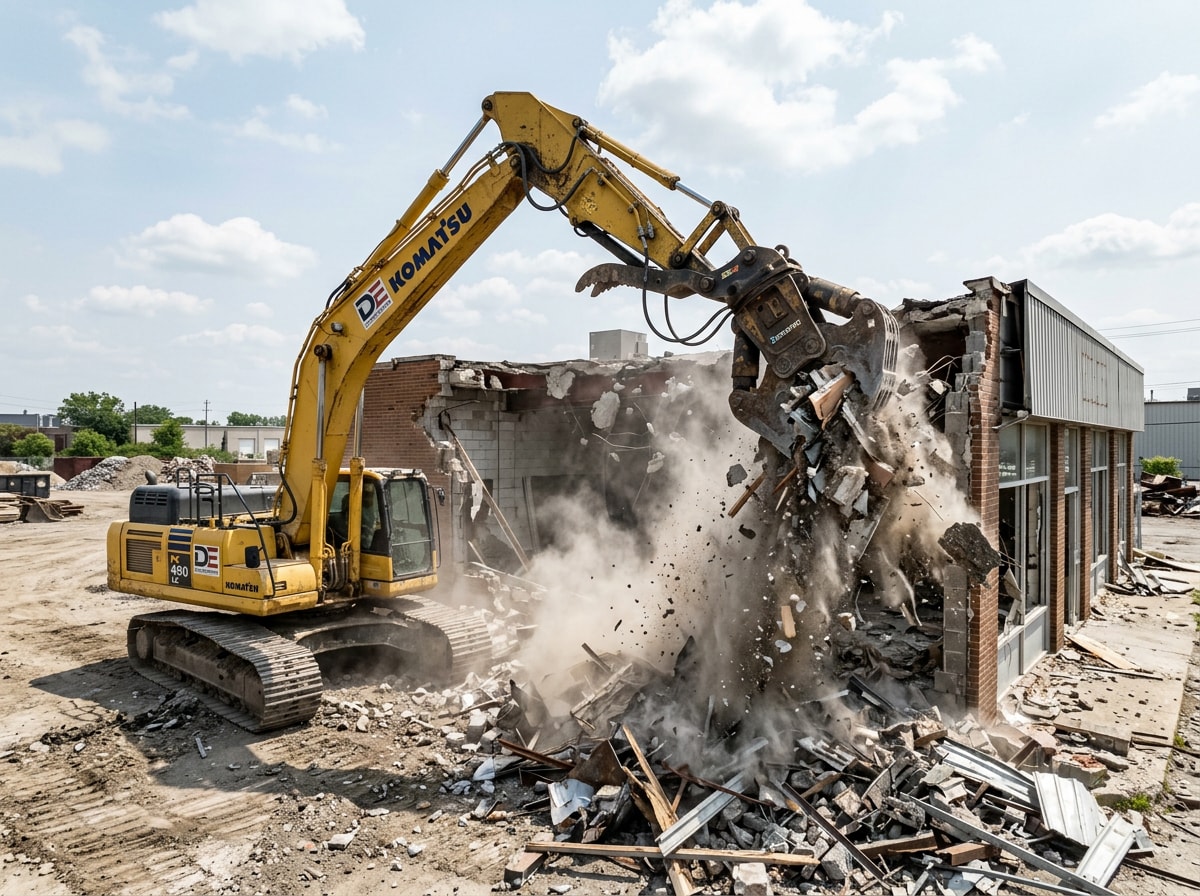
Building Demolition
Building demolition is the service most people picture: full structure removal down to the slab, foundation removal, and site turnover ready for new construction. This applies to a single-family teardown ahead of a custom rebuild and to a commercial property clearing an aging strip mall or office building. Debris hauling and disposal are part of the scope, not an add-on. A cleared, graded lot is the actual deliverable.
Selective Demolition
Selective demolition, sometimes called interior demolition, targets specific elements. Interior walls, fixtures, old boilers, or asbestos-containing materials come out while the surrounding structure stays intact. It's the standard approach for remodels, tenant improvements, and retail renovations where only part of a building needs to go. Because partial demolition often disturbs older building materials, a hazardous-material assessment should happen before interior work begins.
Industrial Demolition
Industrial demolition covers manufacturing facilities, warehouses, and large equipment removal, along with site clearing for redevelopment. These projects usually involve heavier machinery, larger crews, and stricter safety protocols than a residential teardown, since industrial sites often carry complex structural loads and legacy hazardous materials. Commercial demolition at this scale also tends to involve longer permitting timelines and closer coordination with local agencies.
Permits, Asbestos Rules & Debris Diversion in Orange County
Nearly every demolition project in Orange County needs a permit, and the rules go well beyond a simple application.
Permits are a legal requirement, not a formality. The legal obligation to obtain permits derives from California Health and Safety Code § 19825, which makes it unlawful to construct, alter, or demolish any building without first obtaining a permit from the enforcing agency. Each city inside Orange County runs its own building department, so a contractor's experience in your specific city matters.
Asbestos notification is mandatory before demolition starts. Cities like Irvine require evidence of SCAQMD notification before issuing any demolition permit. South Coast Air Quality Management District Rule 1403 governs work practice requirements for asbestos in all renovation and demolition activities. Skipping this step is one of the fastest ways to get a project red-tagged mid-demo.
Debris diversion is a county-wide requirement, and it's the detail most property owners never hear about until the final inspection. Compliance with OC Waste & Recycling's Construction & Demolition Program may be required by OC Public Works, and a project will not be finalized until it meets the 65% diversion requirement associated with applicable construction and demolition projects. That means concrete, wood, metal, and drywall generally need to be recycled or salvaged rather than landfilled, with disposal receipts submitted as proof. A contractor who doesn't account for this in the bid is setting you up for a stalled final inspection.
Safety standards apply before the first wall comes down. OSHA created Subpart T of 29 CFR 1926 specifically for demolition operations because of the unknown hazards these sites carry beyond standard construction work. A competent-person survey of the structure's framing and condition is required before crews start, and that paperwork should exist in writing, not just as a verbal assurance. Review the OSHA demolition standards directly if you want to see the full requirement list.
Service Area
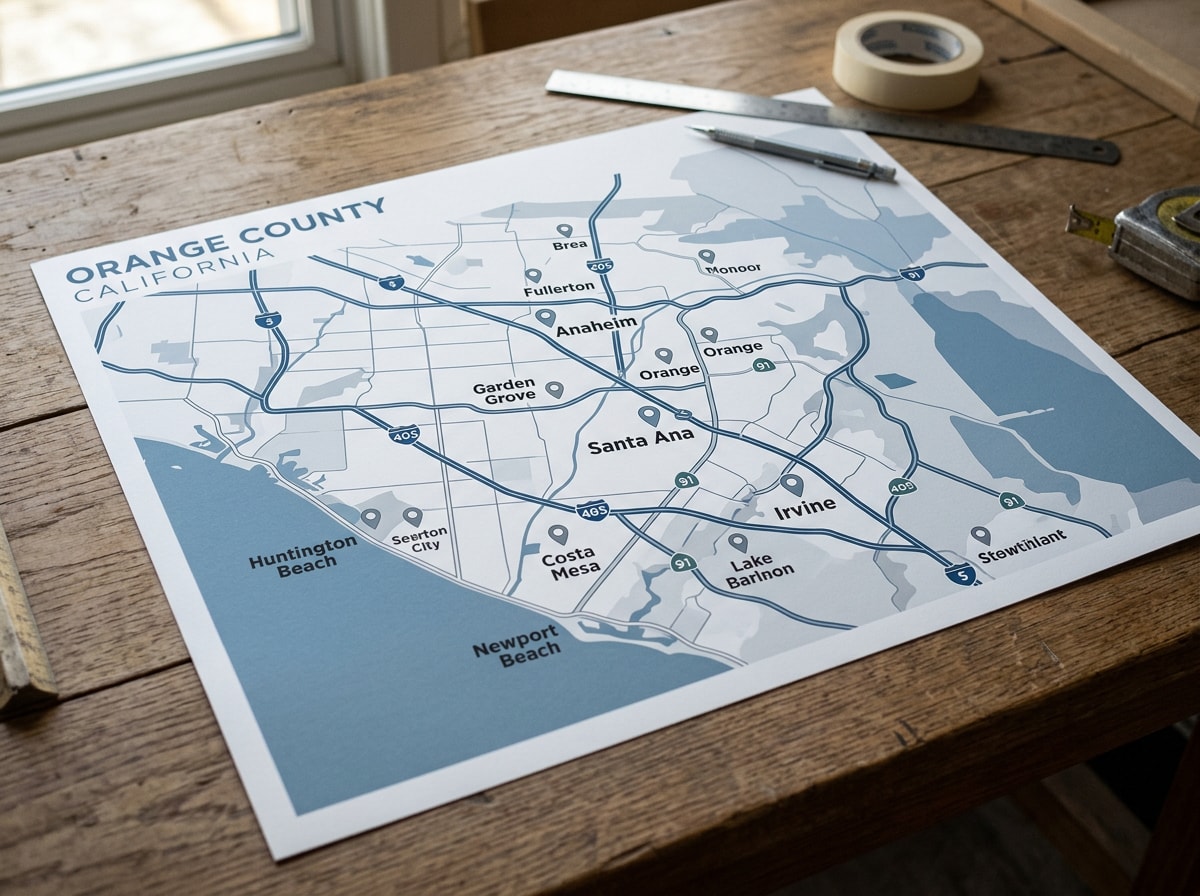
An Orange County demolition contractor should be able to name specific cities they work in, not just claim "the whole county." Permitting offices, inspection schedules, and HOA rules vary from one jurisdiction to the next.
Coverage from most established firms typically spans these areas:
- Orange, Anaheim, and Santa Ana
- Irvine and Fullerton
- Garden Grove and the surrounding greater OC area
This work usually isn't limited to one property type. Residential teardowns, commercial demolition, and institutional projects like schools or municipal buildings all fall under the same service footprint. Check our Orange County service area page for the full list of communities we cover, and visit the homepage to see the rest of Builders Pathway's general contracting services.
How We Control Project Risk
Demolition risk gets controlled before a crew ever shows up with equipment. A documented process starts with confirming known site conditions: utility locations, structural layout, and prior hazmat surveys. It also means spelling out who's responsible for disposal logistics and final inspection sign-off, in writing, before work starts.
Changed conditions still happen. Say a crew opens a wall cavity mid-project and finds material that looks like old asbestos insulation, something the pre-demo survey missed. Work on that section should stop immediately. The area gets isolated. A certified inspector tests the material. Findings get documented before anyone proceeds.
This isn't optional caution. It's the standard response under the OSHA demolition rules described above. If a dispute ever comes down to who paid for an unplanned discovery, your contract language matters more than any verbal promise. Our general contractor lawyer guide for Orange County breaks down what belongs in that contract before you sign.
Public Works: What Comes with the Contract
Public works demolition contracts come with extra documentation most residential clients never see. Agencies typically audit:
- Certified payroll records
- Daily progress reports
- Disposal tickets or waste manifests
- Current insurance certificates
- Bonding capacity (bid, performance, and payment bonds)
If you're hiring for a municipal or institutional demolition project, confirm a contractor has government demolition contract experience before the bid stage, not after.
Frequently Asked Questions
What does a professional demolition contractor actually do on a job site in Orange County?
The process typically covers hazardous material assessment, pulling permits, disconnecting utilities, the physical teardown, and debris hauling once the structure is down. A full-scope contractor manages every step so you aren't coordinating separate specialists for each phase.
Do I need a permit for demolition in Orange County?
Yes. Nearly all residential demolition and virtually every commercial demolition project in Orange County requires a permit before work starts, and state law makes unpermitted demolition illegal regardless of city. A reputable contractor pulls this on your behalf. Request a quote and ask them to confirm the specific timeline for your city's building department.
How long does demolition take?
A typical residential demolition project takes a few days to a week once permits are in hand. The timeline depends on structure size, site access, and whether hazardous materials need remediation first. Larger commercial or industrial projects can take several weeks from mobilization to final site clearing.
What's a realistic budget for hiring a demolition contractor in Orange County?
Budget mainly depends on site accessibility, material disposal fees, permit costs, and whether hazardous materials like asbestos are present. Tight lots, limited equipment access, or older homes with legacy building materials tend to push the number higher than a straightforward, open-site teardown.
How much does it typically cost to demolish a 1,000-square-foot structure?
Demolishing a standard 1,000-square-foot residential structure in Orange County typically runs between $8,000 and $20,000, though this varies by contractor and site conditions. That figure generally covers permit fees, labor, equipment mobilization, and debris removal. Get a written, itemized quote to confirm exactly what's included.
What happens to the debris after a demolition project?
Most of it has to be recycled, not landfilled. Orange County requires covered construction and demolition projects to divert at least 65% of debris through reuse or recycling at approved facilities, with disposal receipts submitted as proof of compliance. A contractor who doesn't plan for this in the bid risks delaying your final inspection sign-off.
Do I need an asbestos survey before demolition starts?
In most cases, yes. Cities across Orange County require notification to the South Coast Air Quality Management District before a demolition permit is issued, under rules that govern asbestos work practices for renovation and demolition activities. Skipping this step can stop a project mid-demo.