Hiring commercial turnkey contractors in Los Angeles County, CA means putting one firm in charge of design, permitting, and construction instead of juggling separate architects, engineers, and builders yourself. That single-contract model keeps your schedule, budget, and accountability under one roof. Below is what turnkey delivery actually includes, what it costs, and how to vet a firm before you sign anything.
Turnkey Design-Build: One Contract, One Deadline
A turnkey design-build model means one company handles architecture, engineering, and construction under a single contract. You get one point of contact from concept to occupancy instead of managing separate vendors who each blame the other when something goes wrong.
This differs from traditional design-bid-build, where a general contractor only steps in after design is finished. Sequential phases mean the architect finishes, then the project goes out to bid, then a contractor starts from scratch on scheduling. Disconnected teams also tend to generate more change orders once field conditions don't match drawings, because nobody caught the conflict early.
| Delivery Model | Who's Accountable | Design & Build Timing | Typical Change-Order Risk |
|---|---|---|---|
| Turnkey Design-Build | One firm, one contract | Overlap (parallel) | Lower — conflicts caught early |
| Design-Bid-Build | Architect + separate GC | Sequential | Higher — drawings vs. field conditions often mismatch |
If you're comparing delivery models for a smaller residential project instead, our breakdown of builder vs. contractor differences in Ventura County covers the same licensing and scope questions from a homeowner's angle.
Explore our full-service approach on the homepage or see our general contracting services.
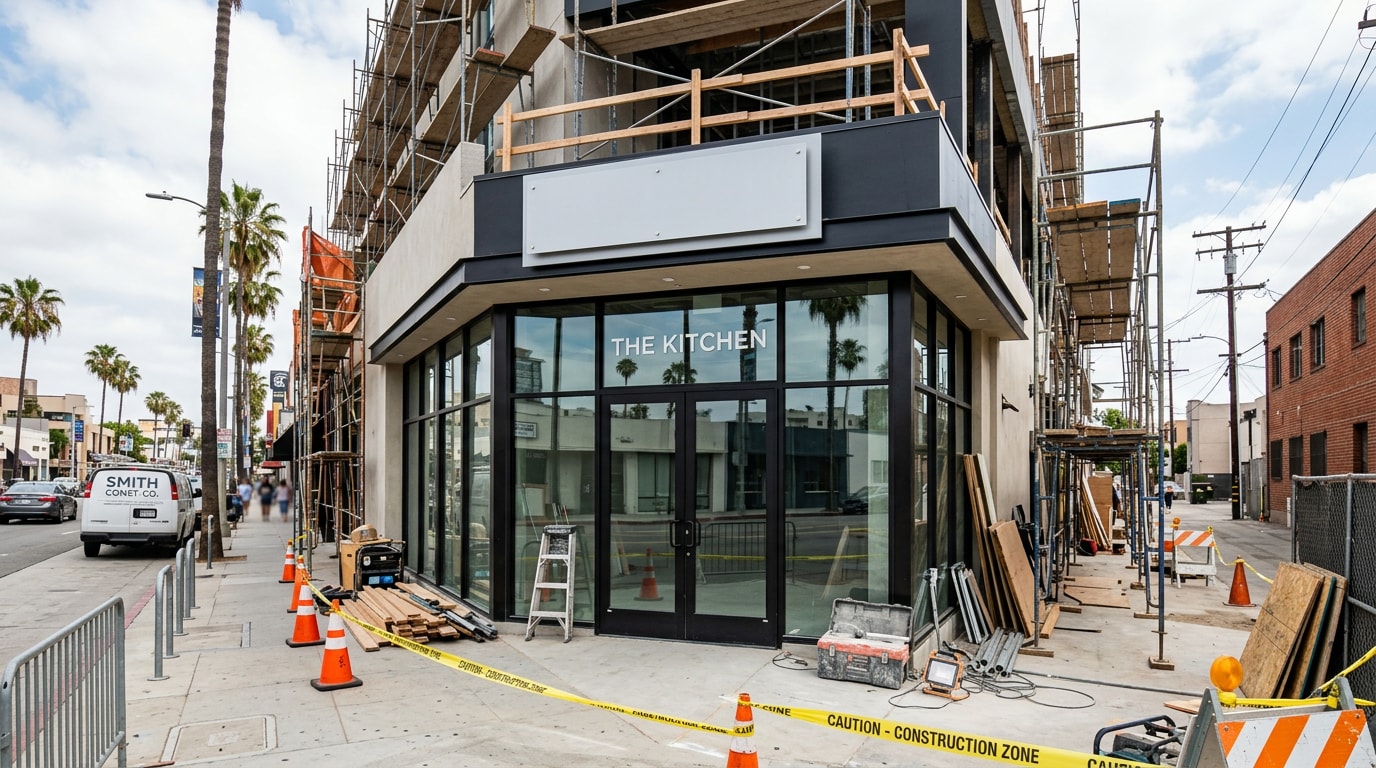
Tenant Improvements (TI) for Offices and Retail
Fast-track tenant improvements turn a plain shell into a branded, functional space. For most tenants, this is the fastest path to opening doors and generating revenue.
TI scope typically includes:
- New interior walls and layout changes
- Flooring, lighting, and finish work
- HVAC and electrical upgrades
- Plumbing and ADA-compliant restrooms
- Ceiling grid and signage-ready storefronts
This work also requires coordinating with landlords, property managers, and leasing agents to satisfy approval steps and document the TI allowance correctly. On top of that, California's commercial energy code adds another compliance layer. The 2025 Building Energy Efficiency Standards go into effect January 1, 2026 , which means any office build-out or retail fit-out permitted after that date needs to meet the updated lighting, HVAC, and envelope requirements under Title 24, Part 6.
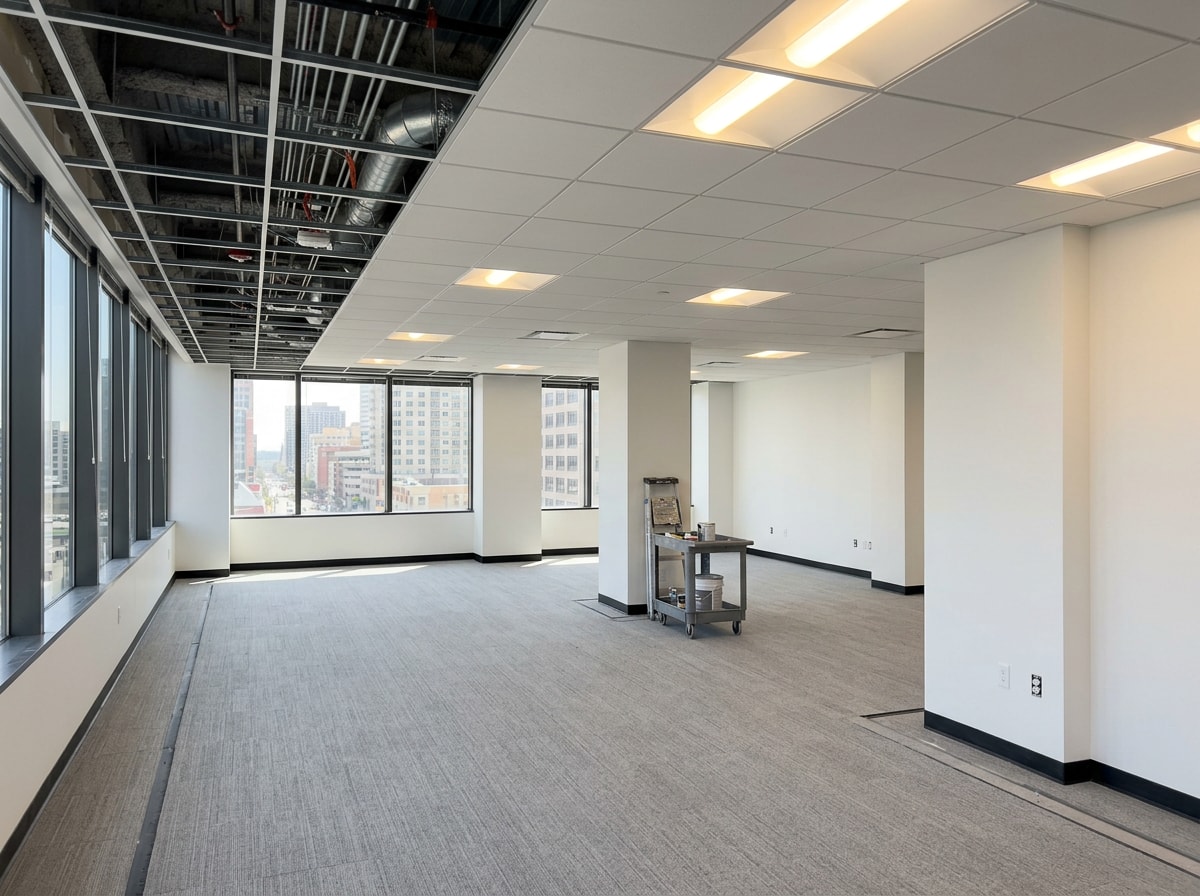
In our own project experience, a straightforward office TI in LA County typically lands between $50 and $200 per square foot, while a full retail build-out with new mechanical systems runs closer to $80 to $250 per square foot. Final numbers always depend on the shell's condition, the scope of MEP work, and how quickly permitting moves through your specific jurisdiction.
Ground-Up Commercial Construction
Ground-up commercial construction covers everything from site clearing and foundation work to final inspection. A typical project moves through this sequence:
- Planning and entitlements
- Permitting
- Architectural design and structural engineering
- Site prep and foundation
- Framing and structural work
- MEP installation
- Interior build-out
- Final inspection and occupancy
This scope also folds in core and shell work, where a base structure is left as a canvas for a future tenant's fit-out rather than treated as a separate service. Meeting LADBS compliance at every phase is non-negotiable for occupancy approval, and a turnkey firm should be managing that inspection sequence proactively, not reactively.
See completed work on our projects page or review our building construction services and general contractor overview.
Industrial and Warehouse Build-Outs
Rising logistics demand across the region has pushed industrial build-outs toward reinforced flooring for heavy machinery and optimized loading docks that support modern supply chains. A commercial general contractor running turnkey industrial delivery typically handles site selection and architecture through permitting and construction, producing warehouse, cold storage, and food-processing facilities on schedule.
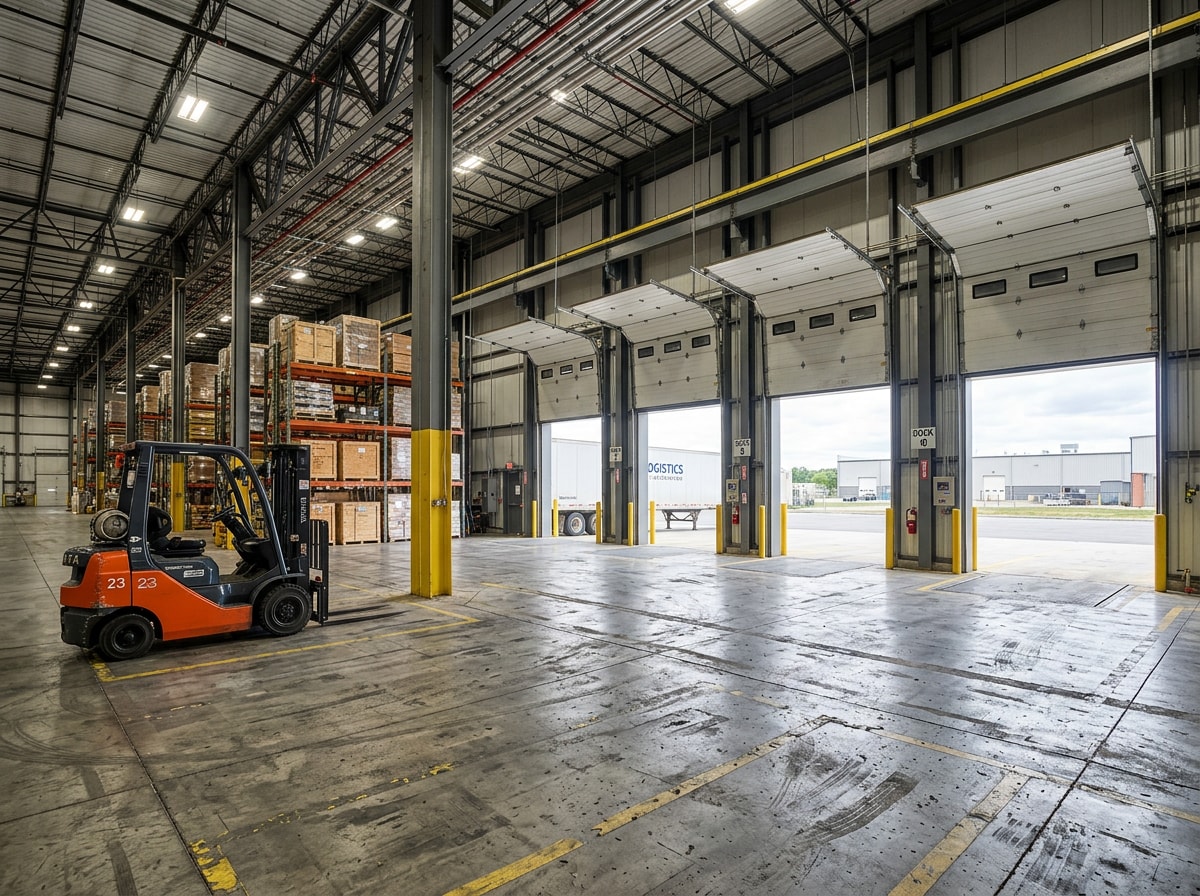
Some firms go further, working with brokers and site owners to help a growing business find the right property before design even starts. That's a service worth asking about when comparing bids for a distribution center or tilt-up construction project, since it can shave weeks off the front end of the timeline.
Seismic Retrofitting for Older Commercial Buildings
Seismic retrofitting protects a property owner's investment and satisfies city mandates by reinforcing older structures against earthquake damage. Here's a detail worth knowing: this is not a single, county-wide rule. The mandatory retrofit program, under Ordinance 183893 and Ordinance 184081, aims to reduce structural deficiencies, because without proper strengthening, vulnerable buildings may fail structurally during or after an earthquake. That specific program is enforced by LADBS within the City of Los Angeles. Several other cities inside LA County, including Santa Monica, West Hollywood, and Pasadena, have adopted their own similar soft-story ordinances with different criteria and deadlines. If you own a commercial building outside the city limits, don't assume the LA city rules automatically apply. Check with your local building department directly.
This service is offered by fewer firms than tenant improvements or ground-up work, but it's essential for anyone holding older commercial stock in the region.
Where We Build Turnkey Commercial Projects
Our teams manage turnkey commercial projects across Los Angeles County, including:
We also serve Ventura County and Orange County for clients with multi-site or regional buildouts.
How to Vet a Commercial Turnkey Contractor
Before signing a contract, confirm these basics:
- License classification.
The Contractors State License Board (CSLB) protects California consumers by licensing and regulating the state's construction industry, and today licenses about 285,000 contractors across 45 classifications. A Class B General Building license is the standard classification for commercial turnkey work.
- Bond status. CSLB-licensed contractors are required to carry a surety bond on file; confirm it's active, not lapsed.
- Workers' compensation. Ask for current policy numbers, not just a claim of coverage.
- Portfolio relevance. Ask for projects similar in scope and square footage to yours, not just any commercial job.
- Permitting track record. Ask how many LADBS or local building department inspections they've closed out in the past year.
Always verify a contractor's license number directly through the CSLB consumer portal before signing anything.
FAQ
What does "turnkey" mean in commercial construction?
Turnkey means one contractor manages the entire project, from design and permitting through final construction, under a single contract. You get one point of accountability instead of coordinating separate architects, engineers, and builders.
How much does commercial construction cost in Los Angeles County?
Costs depend on building type, materials, and scope. In our project experience, tenant improvements typically run $50 to $200 per square foot, while full office build-outs run $80 to $250 per square foot. Get a project-specific number by requesting a free estimate.
How long does a commercial turnkey project take?
Timelines vary by size and complexity. A turnkey delivery model generally finishes faster than design-bid-build because design and construction run in parallel instead of sequentially. The exact schedule is set after site evaluation, design approval, and permitting.
Can you build or renovate while my business stays open?
Many tenant improvement and retail renovation projects can be phased, letting part of the space stay operational while work continues in another section.
What's the difference between core and shell and a full build-out?
Core and shell delivers the base structure, exterior, roof, and main systems, ready for a tenant to design and build their own interior. A full build-out includes the finished interior space, ready to occupy.
Do I need a permit for a tenant improvement project in LA County?
Almost always, yes. Any structural change, new electrical or plumbing work, or change in occupancy classification requires a permit through LADBS or your local building department before work starts.
Are you licensed for commercial construction in California?
A Class B General Contractor license from the CSLB covers commercial construction and permitting through LADBS and city building departments across Greater LA. Always verify a contractor's license number directly through the CSLB license lookup tool.
Does the soft-story retrofit ordinance apply to my building?
Only if your building is in a jurisdiction that has adopted one. The City of Los Angeles enforces its own mandatory program under LADBS. Other cities in the county, like Pasadena and Santa Monica, have separate ordinances with different criteria. Check with your specific city's building department to confirm.
Ready to move forward? Get a free estimate and we'll walk through your scope, timeline, and permitting path before you commit to anything.