Searching for a general contractor attorney near me Ventura County, CA usually means one thing: something on your project already feels wrong. This guide covers what these attorneys handle, when a CSLB complaint beats a lawsuit, and how the right contractor keeps you from ever needing one.
When You Actually Need a General Contractor Attorney in Ventura County
Not every frustrating job site conversation needs a lawyer. Most delays, minor finish-quality complaints, and one-off miscommunications get resolved by talking to your contractor directly.
Legal help becomes worth the cost when one of these five things happens:
- The dollar amount is significant. A leaking roof callback is different from a $40,000 kitchen that was never finished.
- A lien has been threatened or filed. This changes your legal position immediately, whether you're the homeowner or the contractor.
- The contract language is ambiguous or missing entirely. Verbal agreements and one-page scopes create disputes that documentation would have prevented.
- The other party has gone silent or walked off the job. Abandonment is one of the most common triggers for both CSLB complaints and lawsuits.
- You're facing a construction defect claim years after the work was done. These involve statutes of repose that don't wait for you to feel ready.
If none of those apply, keep working the problem directly with your contractor first. If one or more does, the next section walks through your two realistic paths.
CSLB Complaint or Construction Attorney? How Ventura County Homeowners Decide
Homeowners in Oxnard, Camarillo, Thousand Oaks, Simi Valley, and Ventura typically choose between two routes once a dispute won't resolve informally: filing a complaint with the Contractors State License Board (CSLB), or hiring a construction attorney directly.
CSLB's process is free to start and covers a specific set of issues. Complaints within the board's jurisdiction involve failure of a licensed contractor to fulfill the terms of an agreement, including poor workmanship, abandonment of a project, failure to pay subcontractors or material suppliers, or building code violations. Beyond that, CSLB administers two arbitration programs: a mandatory program for disputes involving alleged damages of $25,000 or less, and a voluntary program for disputes involving allegations of damage between $25,000 and $50,000.
If CSLB can't resolve things through mediation, you may be referred to alternative dispute resolution resources — which is often the point where a private attorney enters the picture.
| What matters to you | CSLB Complaint or Arbitration | Hiring a Construction Attorney |
|---|---|---|
| Cost to start | Free to file | Consultation fee, then hourly, flat-fee, or contingency depending on the firm and case type |
| Dollar limits | Mandatory arbitration capped at $25,000; voluntary arbitration up to $50,000 | No cap; handles disputes of any size |
| Who decides | A CSLB mediator or assigned arbitrator | Negotiated settlement, private mediator, or a judge/jury if it goes to trial |
| Best fit | Workmanship complaints, licensing issues, smaller payment disputes | Large-dollar disputes, ambiguous contracts, liens, and construction defect claims |
Bigger claims, contract ambiguity, and defect cases tend to outgrow what CSLB's dollar caps can fix. That's usually when it's time to talk to an attorney or, better yet, to have prevented the dispute with a solid contract in the first place.
Contract Disputes and Scope Creep: The Most Common Ventura County Case
Most disputes we see start with the same root cause: a scope of work that was too vague to enforce. "Remodel kitchen per homeowner preferences" isn't a scope — it's an invitation to argue later about what was promised.
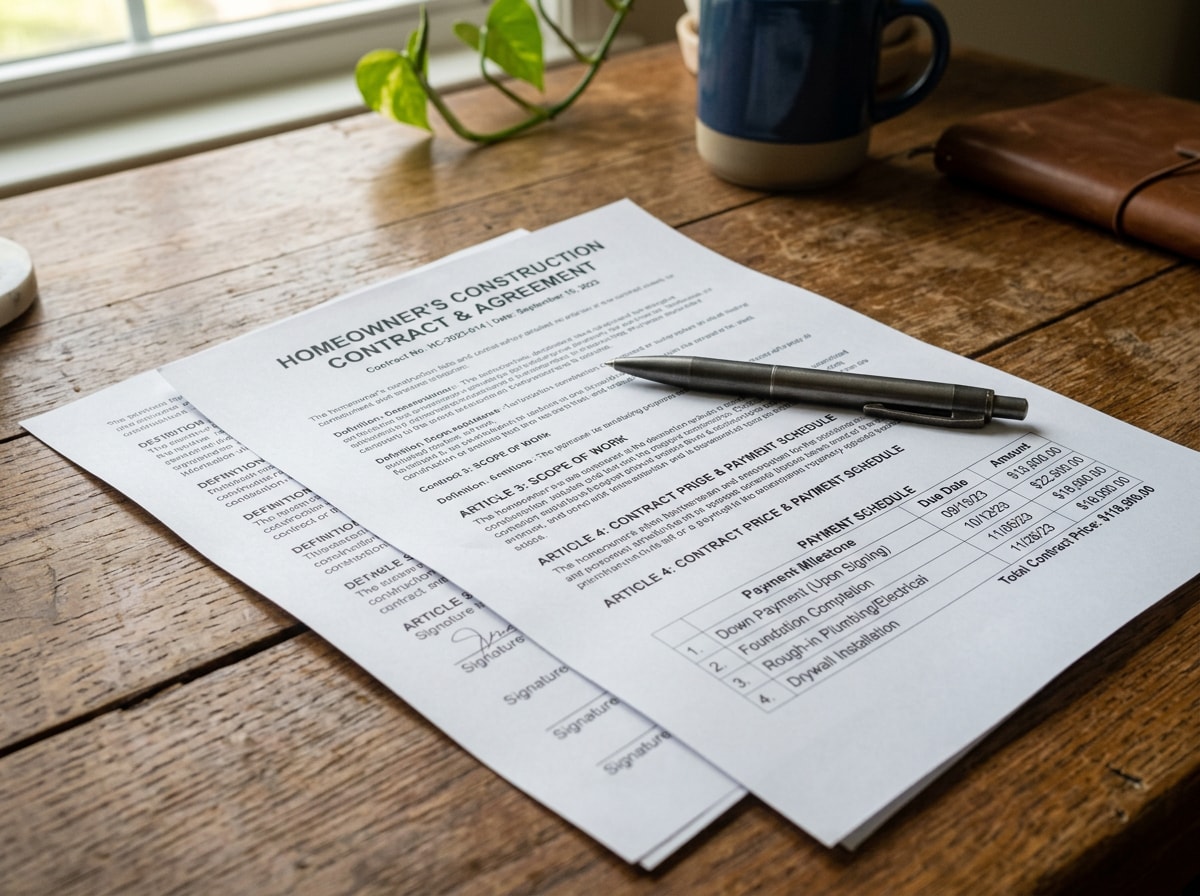
A tight contract fixes most of this before it becomes a legal problem. CSLB's own guidance for homeowners recommends a payment schedule that states when specific phases of the work start and end, and the price for each segment, along with identification of the subcontractors, laborers, and material suppliers involved .
That level of detail does two things at once: it gives both sides a shared reference point, and it gives an attorney something concrete to work from if things do go sideways. Change orders matter here too. If extra work isn't written down and signed before it starts, billing disputes over "who agreed to what" become nearly impossible to untangle later.
Construction Defects: Patent vs. Latent, and California's Filing Deadlines
Defect claims are different from payment or scope disputes. They involve actual damage, safety problems, or work that doesn't meet code, and they often surface long after the project wrapped up.
California splits these into two categories, and a defect is considered patent if it was readily discoverable or apparent by reasonable inspection, and if it's hidden instead, it's classified as latent . The distinction controls your filing deadline:
- Patent defects:
The 4-year statute of limitation applies to patent defects.
- Latent defects:
The 10-year statute of limitation applies to latent defects.
These clocks generally start running at substantial completion, not at the moment you notice the problem. If your roof was finished six years ago and a hidden leak just surfaced, you're likely still inside the window for a latent defect claim. If a visible crack you'd noticed years ago finally causes damage, you may already be close to the patent-defect deadline. Given how fact-specific this gets, confirming your timeline with a licensed attorney early is worth more than guessing.
Mechanic's Liens: Protecting Payment on a Ventura County Project
Unpaid work is one of the most common reasons anyone in construction goes looking for legal help, whether they're the one owed money or the one facing a claim on their property.
Here's the part that surprises a lot of homeowners: even if you pay your contractor in full, unpaid subcontractors, suppliers, and laborers who helped improve your property may still record mechanics liens and sue to foreclose, and if a court finds the lien valid, you could be forced to pay twice or have a court officer sell your home to satisfy it.
The timelines involved are strict and unforgiving:
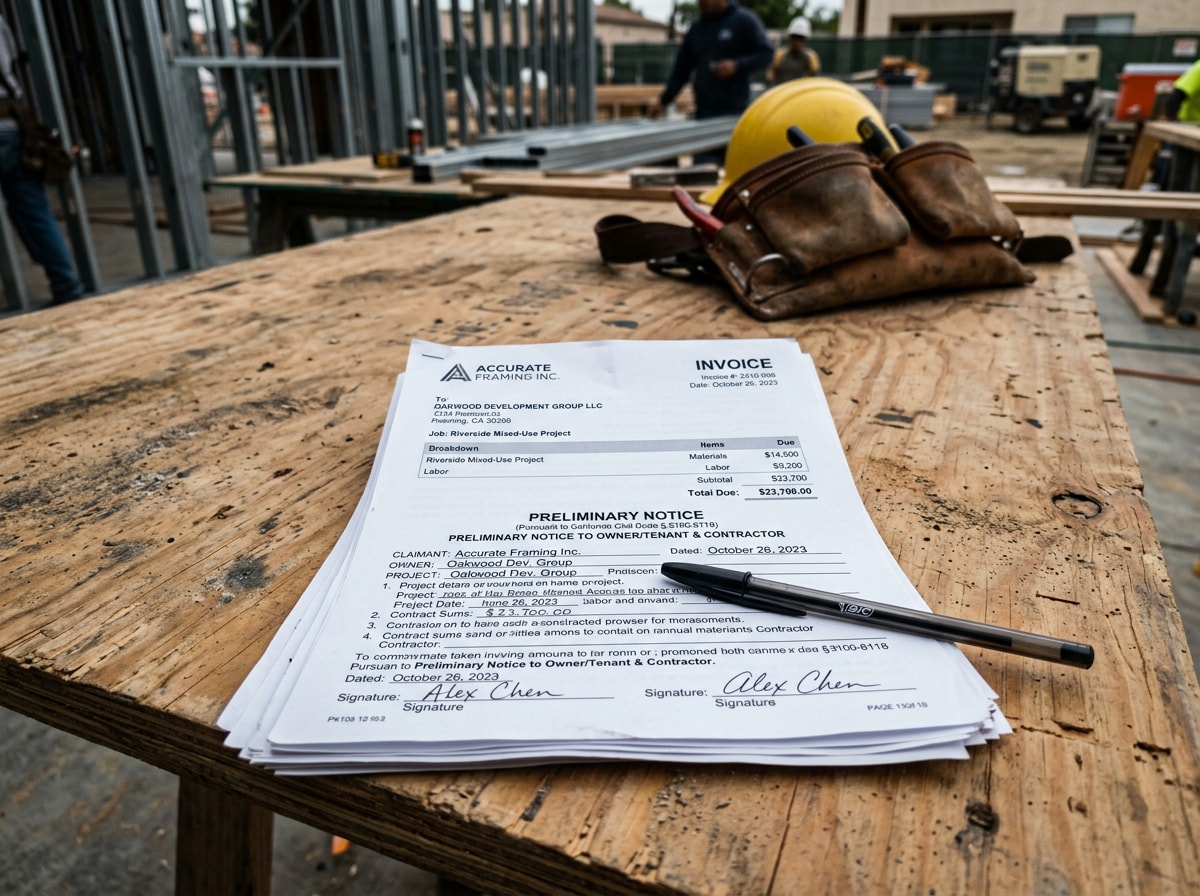
- A subcontractor or supplier must generally serve a Preliminary Notice, and
can give it before delivering supplies or starting work, or up to 20 days after delivering supplies or starting work.
Filing a Notice of Completion with the county recorder's office reduces the amount of time a contractor, subcontractor, laborer, or materials supplier has to record a claim; homeowners have 15 days from the date of completion to do so, and it reduces the direct contractor's window from 90 to 60 days and the subcontractor/supplier window from 90 days to 30 days.
Miss one of these windows on either side of the transaction, and the right to file (or fight) a lien can disappear entirely. This is exactly the kind of deadline where a quick call to an attorney or the CSLB is cheaper than guessing wrong.
The Best Legal Protection Is a Contractor Who Never Gives You a Reason to Sue
Every section above describes what happens after something goes wrong. In practice, the projects that never generate a lien, a CSLB complaint, or a lawsuit share a common trait: a contractor who documents everything before it becomes a dispute.
At BuildersPathway, we build our contracts, payment schedules, and change-order process around the same standards CSLB recommends to homeowners, because we've seen firsthand how a vague scope line turns into a six-month argument. That's the difference between a project that finishes clean and one that ends up needing this article.
If you're still comparing your options for who should run your project, our breakdown of builder vs. contractor in Ventura County explains the practical differences before you sign anything. You can also see completed work in our project gallery, review our general contracting services, or start with a remodeling consultation to get your scope and contract reviewed before a shovel hits the ground. We serve homeowners throughout Ventura County.
Ready to start a project with a contract that actually protects you? Get a free estimate and let's put the scope, schedule, and payment terms in writing from day one.
FAQ
What does a general contractor attorney do in Ventura County?
They review and draft construction contracts before work begins, and they represent clients in disputes over payment, scope, defects, or liens once problems surface. Some of the work is preventative; some kicks in only after a conflict starts.
How much does a construction attorney cost in California?
Hourly billing is most common. Many firms offer a flat-fee initial consultation, and some larger defect claims are handled on contingency. Cost generally rises with case complexity and whether the matter heads toward litigation instead of negotiation.
Should I file a CSLB complaint or hire an attorney first?
Start with CSLB if the dispute involves workmanship, licensing, or a payment amount within its arbitration caps ($25,000 mandatory, up to $50,000 voluntary). Go straight to an attorney if the dollar amount is large, a lien is already filed, or the contract terms themselves are in dispute.
How do I find a good general contractor attorney near me?
Verify their license status and disciplinary history through the State Bar of California's attorney search tool, ask about their specific construction case history rather than general litigation experience, and clarify whether they lean toward negotiated settlements or are comfortable taking a case to trial.
Do I need an attorney to file a mechanic's lien in California?
Not always, but the filing windows are strict and a small mistake can void your rights entirely. If you're a contractor or supplier owed money, or a homeowner facing a lien you believe is invalid, a quick consultation is usually worth it before a deadline passes.
What's the difference between a builder and a general contractor?
The terms get used interchangeably, but they aren't always the same license or scope of work in California. Our guide on builder vs. contractor in Ventura County breaks down which one you actually need for your project.