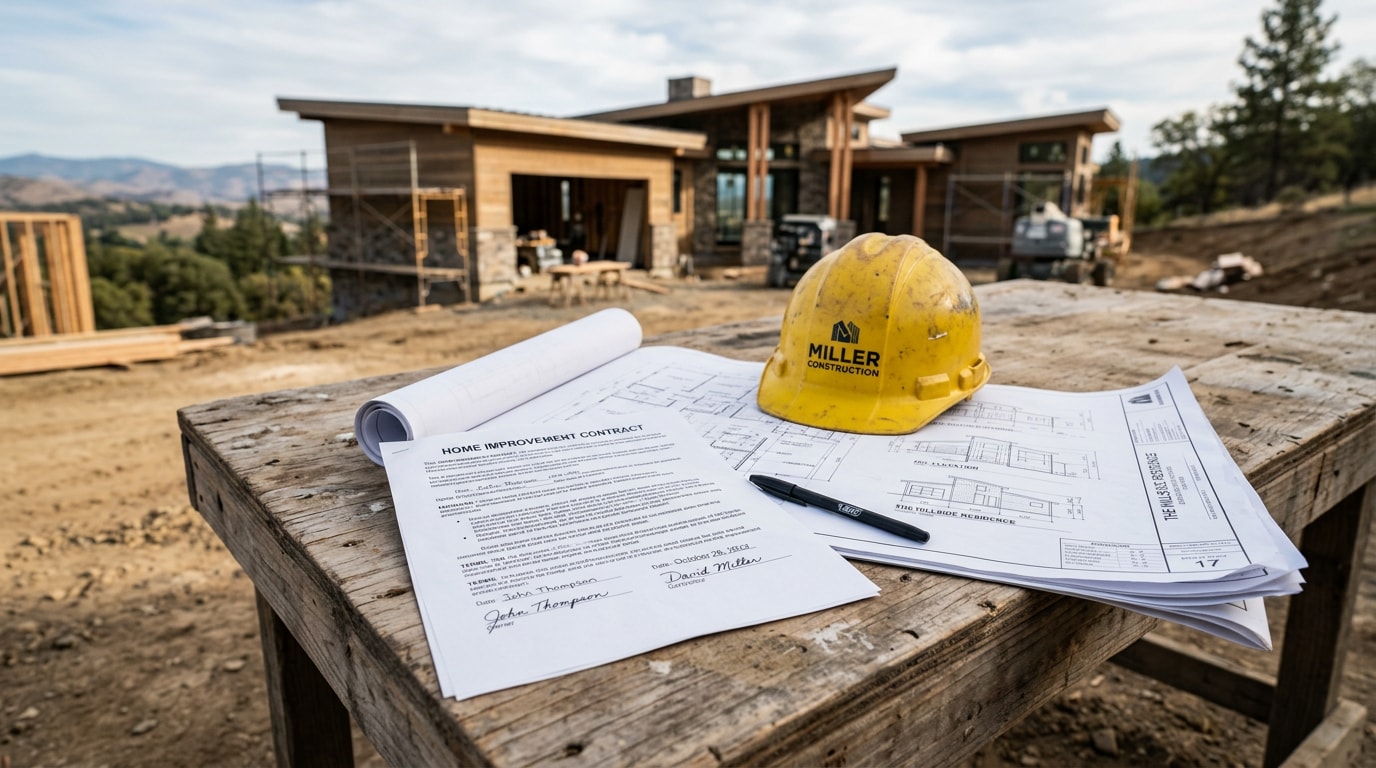
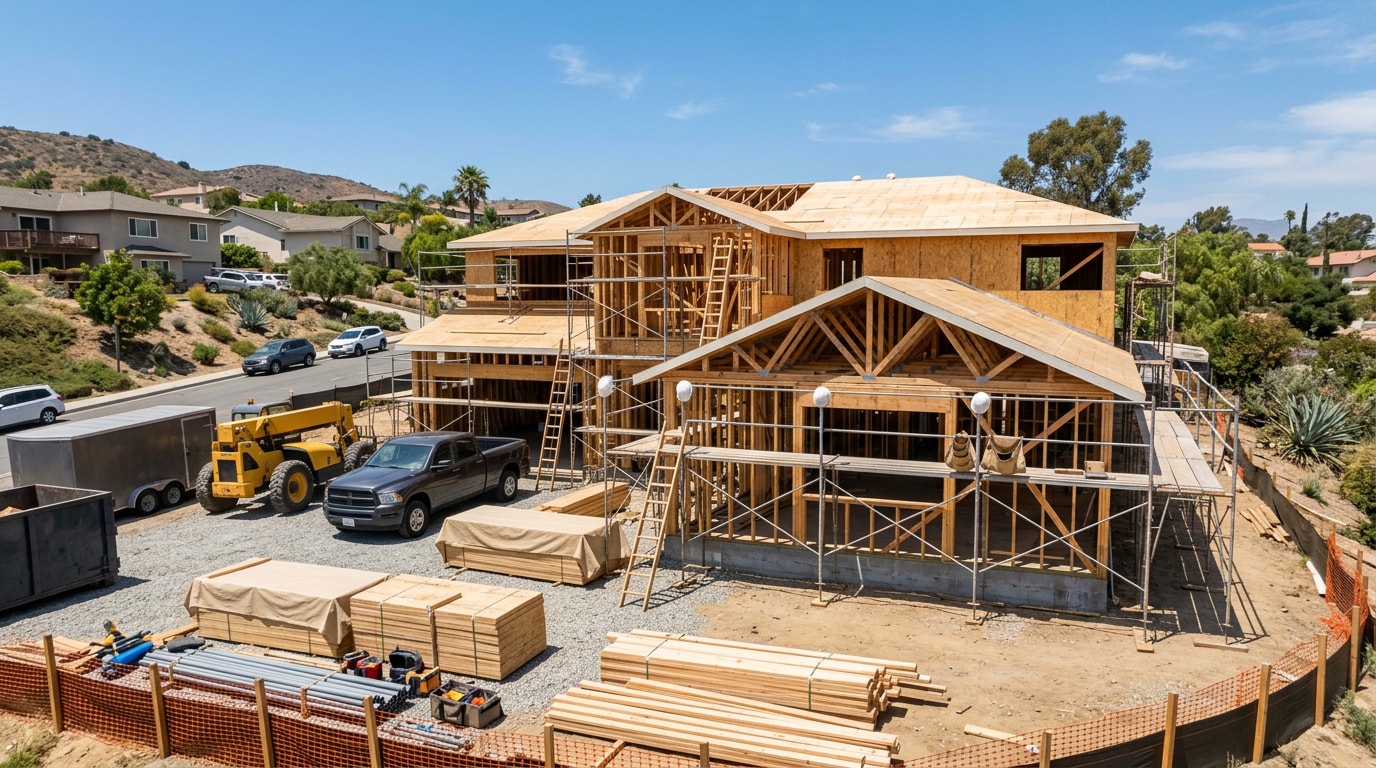
The duties of a general contractor in Orange County, CA go far beyond swinging a hammer. A licensed GC plans the project, pulls permits, hires and supervises every trade, manages the budget, and stays accountable for code compliance from the first sketch to the final walkthrough. Here's exactly what that job covers and why skipping any part of it tends to cost homeowners money later.
What Does a General Contractor Do in Orange County?
A general contractor acts as the project manager and single point of contact for a construction or renovation job. That coordination is the whole point of hiring one instead of managing a dozen separate vendors yourself.
Think of the general contractor as the hub of the wheel. Architects, electricians, plumbers, and inspectors all report back to one person who keeps the project moving and accountable.
On a typical Orange County job, the core duties include:
- Pre-project planning and budgeting
- Pulling permits and scheduling inspections
- Hiring and supervising subcontractors
- Sequencing trades and managing material deliveries
- Staying current on local building codes
- Running quality control checks before work gets covered up
- Communicating progress and change orders to the homeowner
The scope shifts with the project. A kitchen remodel calls for different oversight than a ground-up addition, but the underlying duty stays the same: someone has to own the outcome. Our General Contracting Services page breaks down what full-service management looks like on a real project.
How a General Contractor Manages a Project From Start to Finish
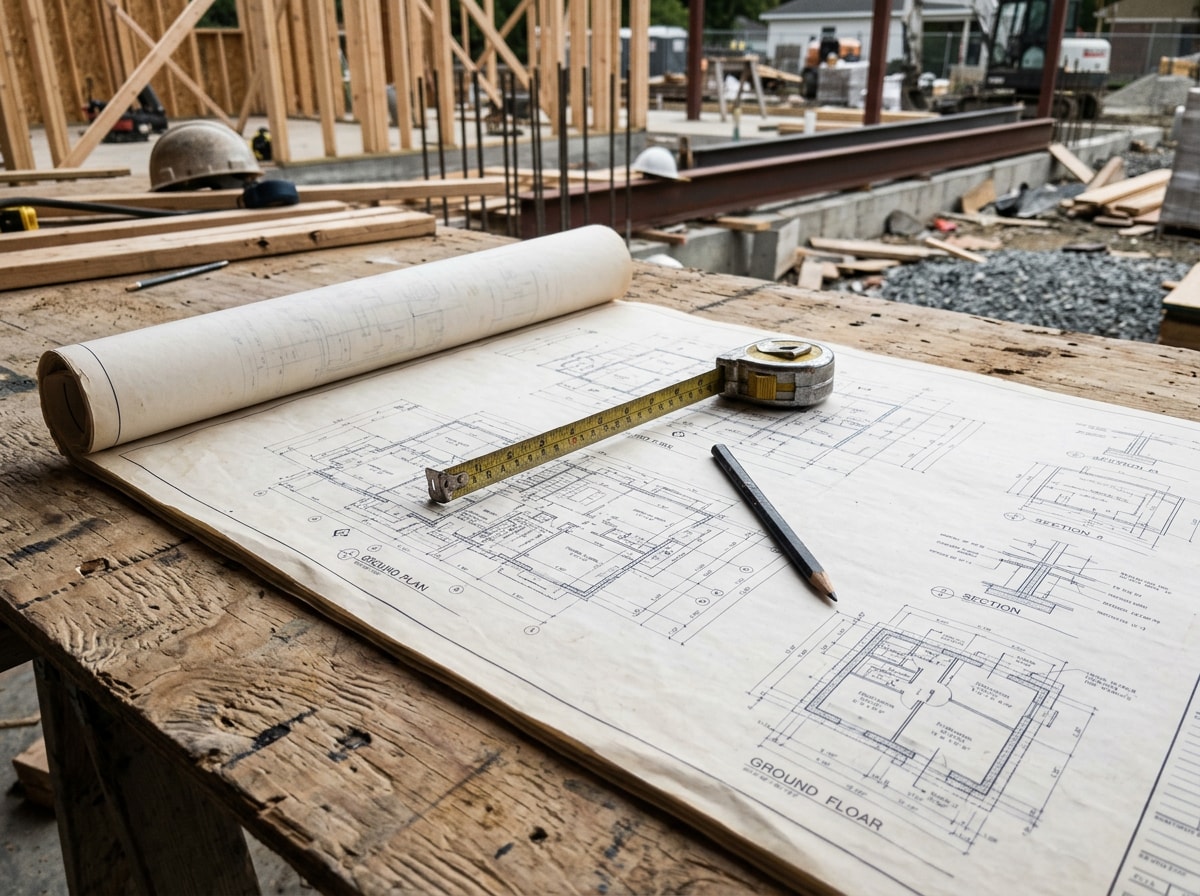
Most projects move through three phases: pre-construction, active construction, and closeout. Closeout includes final inspections, lien releases, and project documentation. Skipping a step in one phase usually creates a problem in the next.
| Phase | What the GC handles |
|---|---|
| Pre-construction | Budgeting, permit applications, subcontractor bidding, scheduling |
| Construction | Trade sequencing, daily site supervision, quality checks, inspections |
| Closeout | Final walkthrough, punch list, lien releases, permit sign-off |
A general contractor's job doesn't end once the crew starts framing. Staying engaged through the entire sequence, from the first permit application to the final punch-list item, is part of the duty, not an optional extra.
Day-to-day scheduling is where this shows the most. A GC sequences trades so the electrician isn't waiting on the drywaller, and the drywaller isn't waiting on a delayed material delivery. That means adjusting the schedule when an inspection reveals unexpected work and keeping the homeowner updated along the way. Good sequencing is often invisible when it's done well, the project just seems to flow, but it's one of the more labor-intensive duties behind the scenes.
Permits, Inspections, and Code Compliance Duties
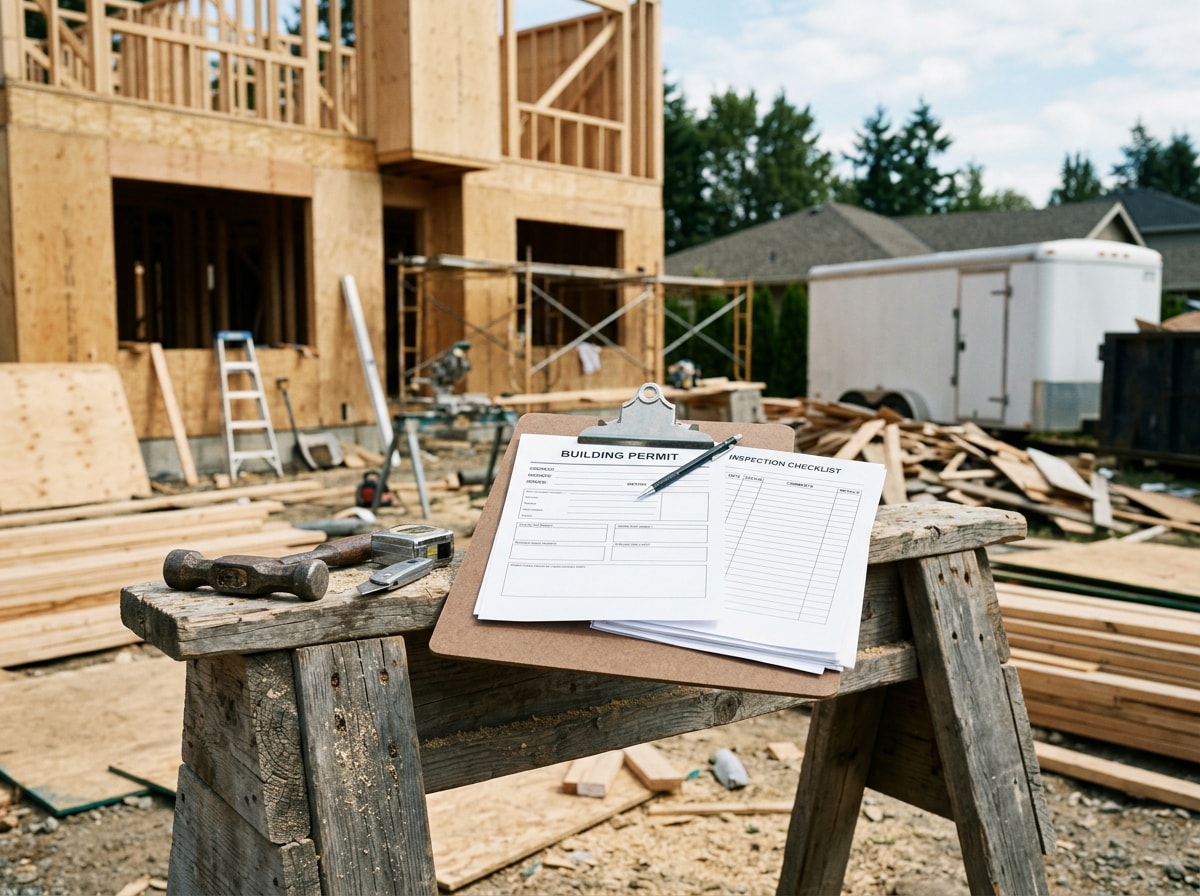
Pulling permits and coordinating inspections is one of the core duties of a general contractor in Orange County, CA, and it's also one of the most jurisdiction-specific. Requirements, review timelines, and inspection scheduling vary by city.
Some Orange County cities, like Irvine, run their own building departments with dedicated plan-check staff. Smaller cities often route permit applications through the county instead, which can mean different turnaround times. We've seen permit review windows differ by several weeks between a self-permitting city and one that routes through the county, simply based on staffing.
Pulling permits under a valid, active CSLB license is also a legal obligation, not a courtesy. California's licensing threshold changed in 2025: Assembly Bill 2622 raised the "minor work" exemption from $500 to $1,000, but that exemption disappears entirely the moment a project needs a building permit or the person doing the work hires any help. Assembly Bill 2622 increases the minor work license exemption from $500 to $1,000, but if the work requires a permit or the unlicensed person hires help, a license is required even under $1,000. That means almost any real remodel or addition still requires a licensed contractor, regardless of the dollar figure.
Skipping a permit risks fines, failed inspections, and complications when the home is eventually sold. Homeowners can confirm a contractor's license status directly through the CSLB's official license check tool, and the board's own AB 2622 implementation bulletin spells out exactly when the exemption does and doesn't apply.
Legal exposure doesn't stop at permitting. If a dispute over scope, payment, or workmanship does come up, our legal guide for Orange County homeowners walks through what recourse actually looks like.
Local Building Code Expertise Across Orange County
Orange County spans coastal neighborhoods, inland valleys, and hillside communities, each with slightly different environmental conditions and code amendments. A contractor who understands that regional variation can anticipate issues a generic approach would miss.
Coastal humidity affects material choices and finish timing near the water. Inland heat changes curing schedules for concrete and stucco. Locally adopted amendments can also add requirements beyond the base state code, particularly around fire-rated materials in certain zones.
Staying current on these variables is a compliance duty, not a nice-to-have. All of it sits on top of the statewide framework published by the California Building Standards Commission, which governs Title 24 requirements for every jurisdiction in the state. Site conditions matter here too; our Site Preparation services page covers how grading, drainage, and soil work get handled before framing ever starts.
Subcontractor Hiring, Scheduling, and Quality Control Duties
Vetting, hiring, scheduling, and supervising subcontractors is a core duty that often goes unnoticed until something goes wrong. A general contractor is responsible for confirming each subcontractor carries an active license and appropriate insurance before work begins.
Quality control doesn't stop at hiring. It includes:
- Checking work against the agreed scope before it gets covered up
- Catching framing, plumbing, or electrical mistakes before drywall goes up
- Managing the schedule so trades aren't tripping over each other on-site
- Issuing corrections when subcontractor work falls short
Homeowners rarely see this part of the job, but it's where a lot of project risk gets managed quietly. See our full General Contractor services category for the range of trades we coordinate directly on Orange County projects.
General Contractor vs. Subcontractor: Duties Compared
| Responsibility | General Contractor | Subcontractor |
|---|---|---|
| Overall project scope | Owns the full project outcome | Owns one specific trade |
| Permits | Pulls and manages permits | Works under the GC's permit |
| Scheduling | Sets and adjusts master schedule | Follows the GC's schedule |
| Client communication | Primary point of contact | Reports to the GC, not the homeowner |
| Licensing | Class B general license | Specialty C-classification |
A licensed Class B general contractor is the right fit for projects involving multiple trades or structural changes. A single-trade project, like a standalone roof replacement, typically only needs a specialty contractor licensed in that one trade. The distinction isn't just paperwork: a general contractor's duties include managing the interaction between trades, making sure the plumber's rough-in lines up with the framer's wall placement, for example.
Budgeting and Cost Oversight Duties
Budgeting is an ongoing duty, not a one-time estimate. A general contractor tracks costs as the project moves, flags changes early, and communicates how scale, complexity, and material or labor choices affect the final number.
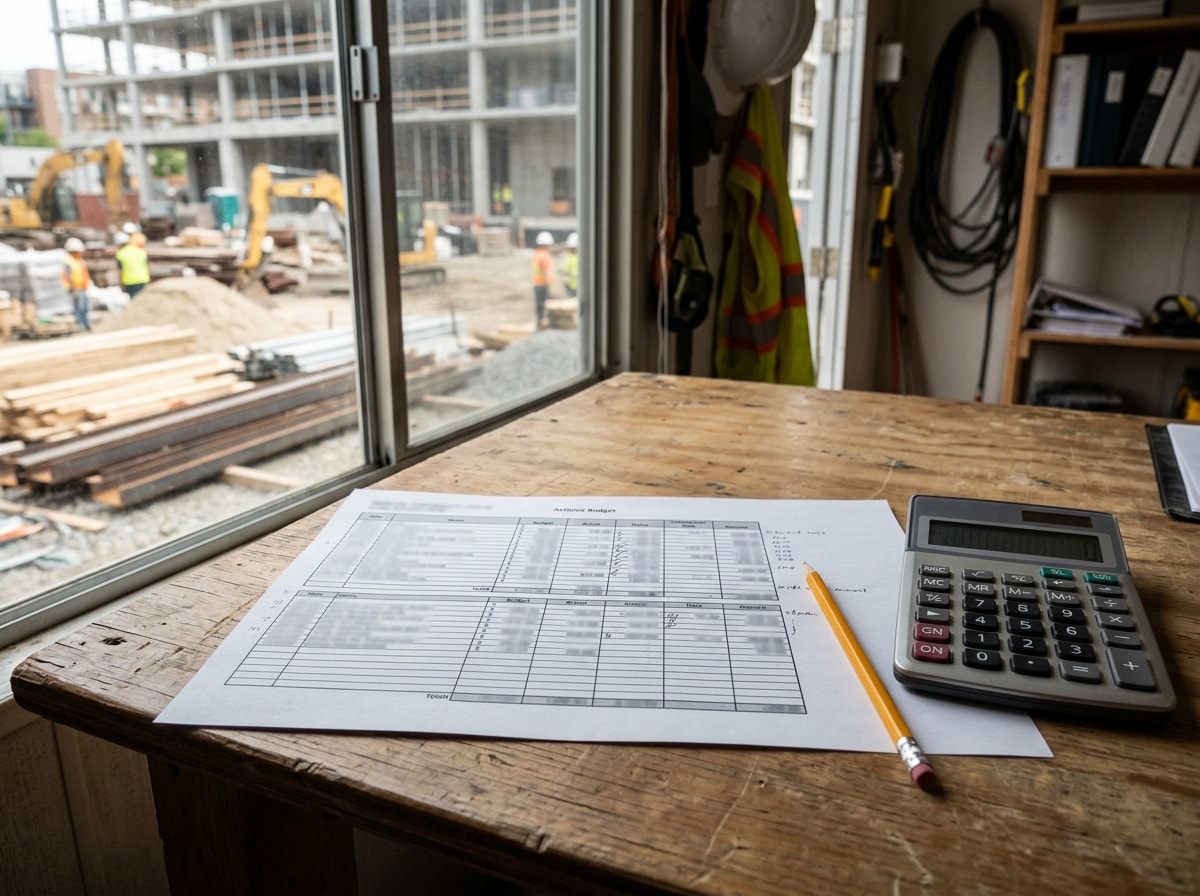
Orange County remodeling costs vary widely by scope. A bathroom refresh and a full second-story addition sit at opposite ends of the budget spectrum, and even similar-looking projects can differ based on site access, structural surprises, or material upgrades. Because pricing depends on so many project-specific variables, a detailed in-person estimate will always be more accurate than a general range. Get a free estimate once you have a clear scope in mind.
Questions to Ask Before Hiring a General Contractor
Before signing anything, ask a few direct questions tied to the duties above:
- Is your license current, and can I verify it myself?
- How will permits and inspections be handled for my specific city?
- Who manages subcontractors day to day?
- How often will I receive project updates?
- How are schedule changes communicated?
A contractor who answers these clearly is usually one who takes the full scope of the job seriously. Not every contractor works across every Orange County city; check our service area page to confirm coverage before reaching out, or contact us directly with your project details.
FAQ
What types of projects do general contractors typically work on?
General contractors handle a wide range of project types, from large commercial builds to single-family home renovations. Scope can include additions, kitchen and bathroom remodels, structural repairs, and ground-up residential construction, with duties scaling up or down based on project size.
What's the difference between general contracting and subcontracting?
A general contractor oversees the entire project and manages every trade involved, acting as the intermediary between the homeowner and the people doing the hands-on work. A subcontractor handles one specific trade, like electrical or plumbing, under the general contractor's supervision and schedule.
Do general contractors handle permits and inspections in Orange County?
Yes. Pulling permits and coordinating inspections is a core duty, not an add-on service. Requirements vary by city, so a contractor who tracks the local process can set realistic timelines instead of letting a homeowner discover delays mid-project.
What's the typical timeline for a general contractor's project?
Timelines depend entirely on scope, permit review speed, and how many trades are involved. A general contractor builds the schedule around realistic permit and inspection windows for the specific city, then adjusts it as the job progresses.
How do I choose the right general contractor?
Verify the license is active, confirm insurance coverage, ask how subcontractors are vetted, and get a clear answer on communication frequency. A contractor who is transparent about process and pricing upfront is a strong signal.
How much money per square foot do I need to budget for a home renovation?
Per-square-foot costs vary significantly depending on the project type, finish level, and structural complexity involved. A cosmetic update costs far less per square foot than a renovation requiring new electrical, plumbing, or structural work, so a site-specific estimate is the only reliable way to budget accurately.
About the Builders Pathway Team
This guide was prepared by the general contracting team at Builders Pathway, a licensed construction company serving Orange County and surrounding areas of Southern California. Our project managers handle permitting, subcontractor coordination, and code compliance on remodels and new builds across the region. Questions about your specific project? Contact us for a free estimate.