A general contractor in North Hollywood, CA typically charges a fee of 10% to 20% of your total project cost, with most residential remodels landing between 15% and 18%. That percentage covers supervision, overhead, and profit, not the lumber, tile, or subcontractor labor billed separately as hard costs. Here's exactly how that fee breaks down, what pushes it up or down, and how to tell a fair bid from an inflated one.
How Much Does a General Contractor Charge in North Hollywood, CA?
Contractors generally charge between 10% and 20% of the total project cost on most residential jobs in Southern California, and North Hollywood pricing sits squarely in that band. Local labor costs, permitting timelines through the City of Los Angeles, and demand for licensed, insured contractors keep fees toward the middle-to-upper end of that range compared to less expensive inland markets.
Not every job gets priced as a percentage. Smaller projects, like a single repair, a punch list, or a quick consultation, are usually billed hourly instead, since calculating a percentage on a $1,500 job doesn't make financial sense for either side.
On our own North Hollywood projects, we've opened up walls in 1950s and '60s Valley Village and Toluca Lake bungalows and found original knob-and-tube wiring or cast-iron drain lines still in place. That's the kind of mid-project discovery that pushes a fixed-percentage bid toward a cost-plus arrangement instead, because nobody can price unknown conditions behind a wall before demo starts.
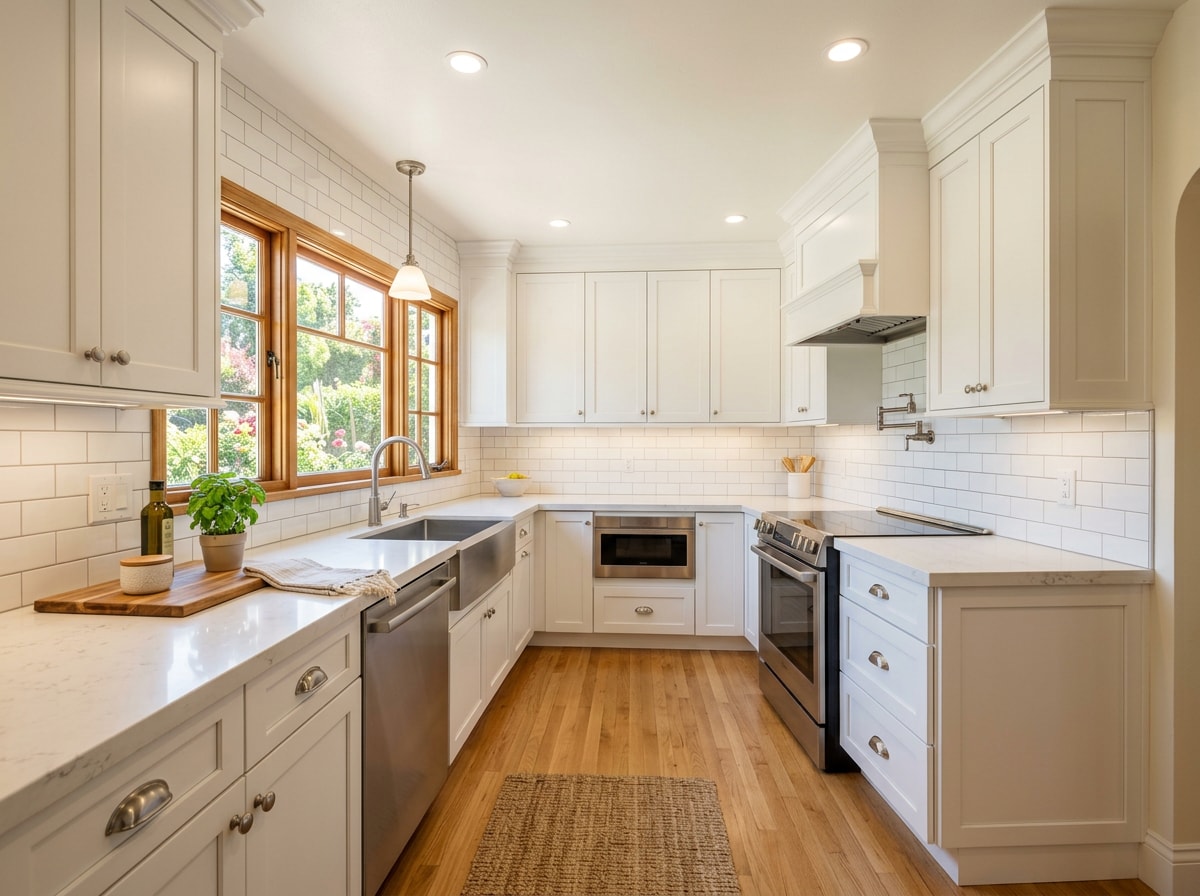
Homeowners planning a renovation can browse our North Hollywood general contracting services for project-specific pricing, or check our North Hollywood service area page for local project examples.
General Contractor Pricing Structures & Fee Types
A "fee percentage" is just one of several ways contractors price a job. Depending on project size, scope clarity, and timeline, a North Hollywood contractor might quote a percentage, a cost-plus arrangement, an hourly rate, or a flat fee. Knowing which model fits your project makes it easier to judge whether a bid is fair.
| Fee Structure | Typical North Hollywood / San Fernando Valley Rate (2026) | Best Use Case |
|---|---|---|
| Fixed Percentage Fee | 10%–20% of total project cost | Larger, clearly defined projects like additions or full remodels |
| Cost-Plus Contract | Actual cost + 15%–25% markup | Custom builds or projects where scope may change mid-way |
| Hourly Rate | $75–$150 per hour | Small repairs, consultations, short-duration work |
| Flat Fee | Fixed dollar amount, agreed upfront | Small, tightly scoped jobs like a single room or simple permit job |
Fixed-percentage pricing works best when the scope is locked in before work starts, so both sides know roughly what the total will be. Cost-plus contracts make more sense for remodels where surprises are likely, like opening a wall in an older North Hollywood home and finding outdated wiring or plumbing behind it.
General Contractor Fee Percentage Markup
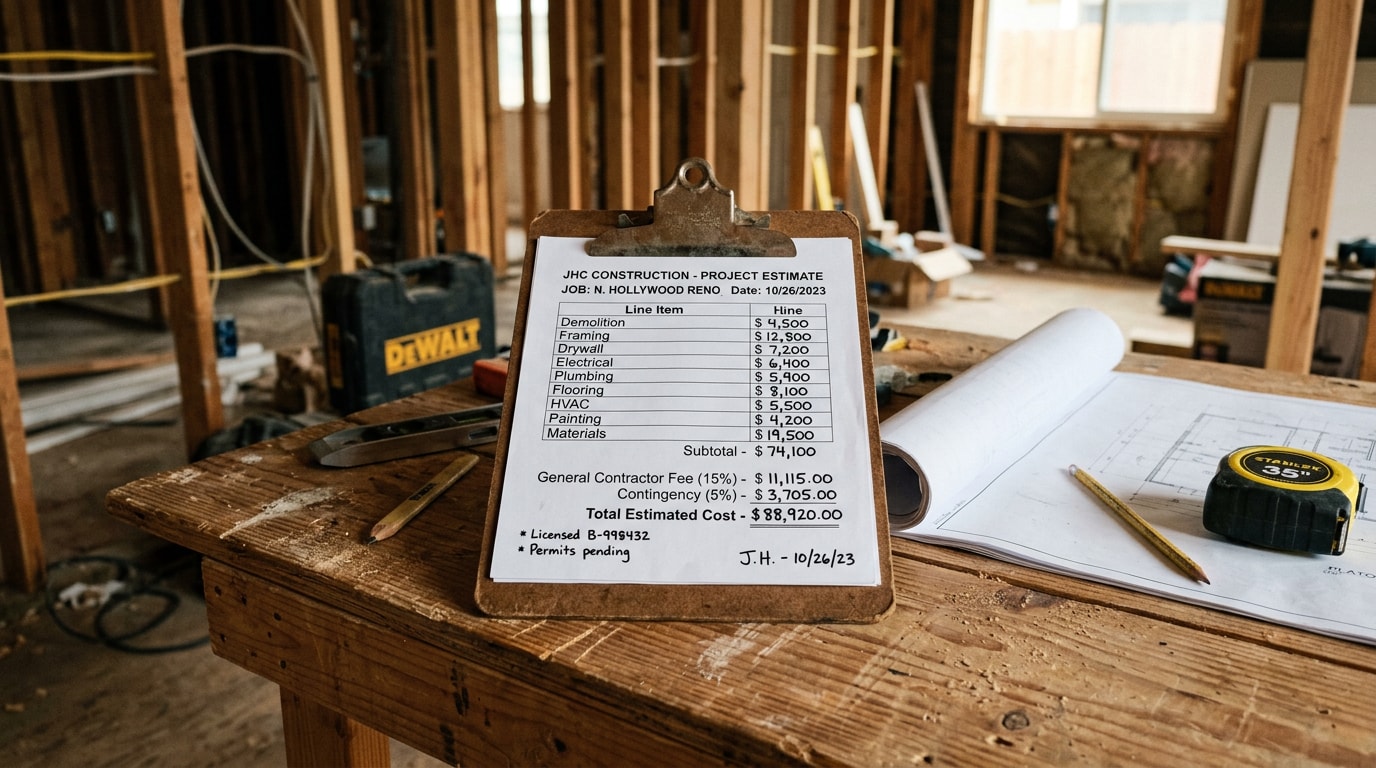
The fee percentage is calculated against subcontractor labor, materials, and total hard costs, not against the contractor's own labor alone. If a kitchen remodel's hard costs run $60,000 and the agreed markup is 15%, the contractor's fee adds roughly $9,000 on top.
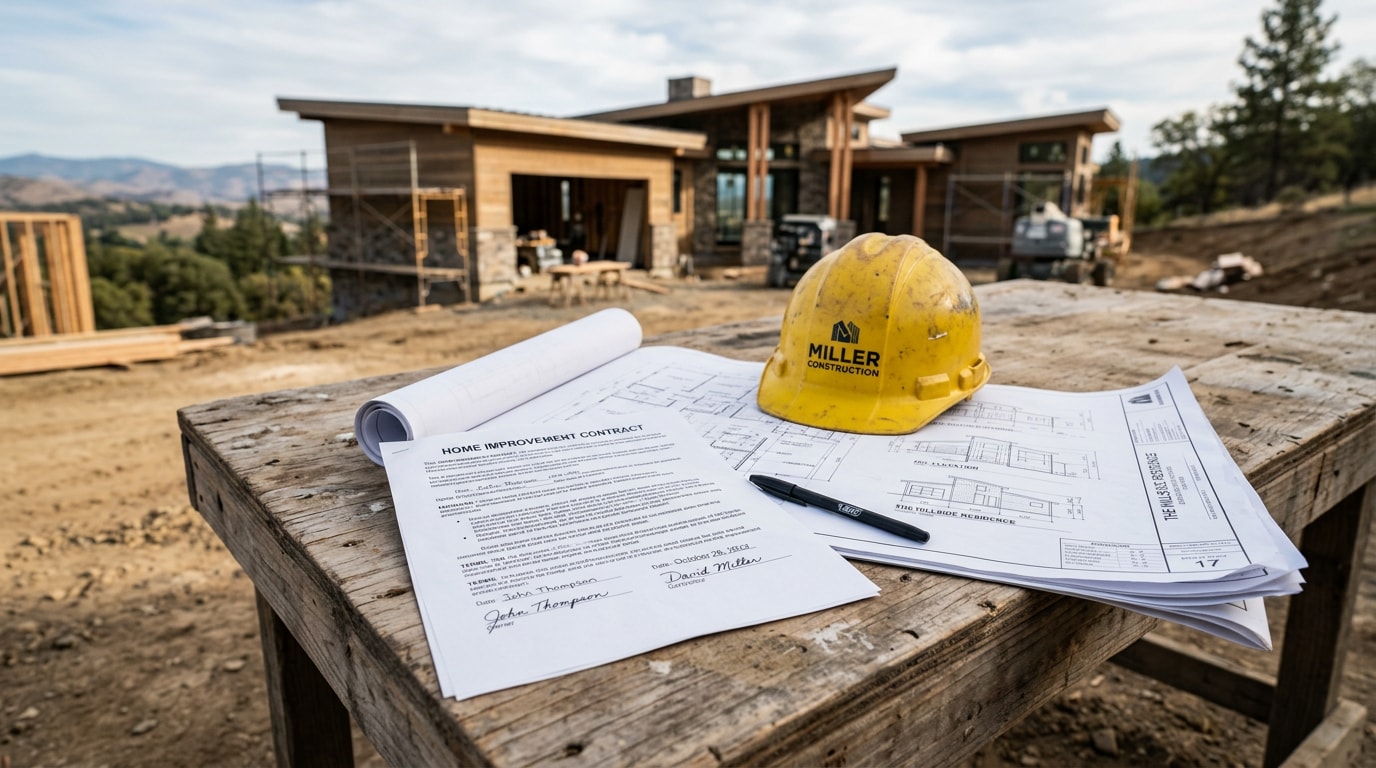
That percentage can be fixed at the start or adjustable, as it often is in cost-plus contracts where final costs aren't known upfront. Before signing, ask your contractor to write the markup percentage directly into the contract rather than leaving it as a verbal understanding.
General Contractor Hourly Rate
Hourly billing typically applies to small jobs, consultations, or work where scope is too limited to justify a percentage fee. In North Hollywood, hourly rates generally run $75 to $150 per hour, depending on the contractor's experience and the complexity of the task.
This model is separate from percentage-based pricing and usually only comes up for projects under a few thousand dollars, think drywall patches, minor electrical fixes, or a short site visit before a larger bid.
What's Actually Inside a General Contractor's Fee Percentage
The quoted percentage isn't pure profit, a common assumption that leads homeowners to undervalue low-ball bids. A meaningful chunk covers overhead: liability insurance, licensing costs, warranty reserves, and the project manager's time coordinating subcontractors and inspections.
What's left after overhead is the contractor's actual profit margin, which is often smaller than homeowners expect. Builders reported an average gross profit margin of 20.7%, with operating expenses consuming an average of 12.0% of revenue, leaving a net profit margin of 8.7% , according to NAHB's national builder profitability data. In other words, overhead regularly eats a bigger share of the markup than the profit the contractor actually keeps.
That's worth remembering when comparing quotes. A bid with an unusually low percentage might be cutting insurance coverage, warranty protection, or supervision time rather than offering a genuinely better deal.
GC Fee Percentage by Project Type in North Hollywood (2026)
Fee percentages shift depending on the type and size of project, which matters when you're budgeting for something specific rather than asking about the fee percentage in the abstract.
| Project Type | Typical Fee Percentage | Notes |
|---|---|---|
| Kitchen or Bath Remodel | 15%–20% | Smaller scope means oversight work doesn't shrink proportionally |
| ADU Construction | 12%–18% | Permitting complexity in LA County can push fees toward the higher end |
| Home Addition | 12%–17% | Mid-size scope, moderate coordination needs |
| Full Home Renovation | 10%–15% | Larger dollar volume allows some economies of scale |
| New Construction | 10%–15% | Lower percentage, but larger overall dollar fee |
Larger projects often carry a lower percentage because supervision costs don't scale up at the same rate as the budget. Smaller jobs sometimes carry a higher percentage simply because a contractor still has to manage permits, scheduling, and site visits regardless of job size.
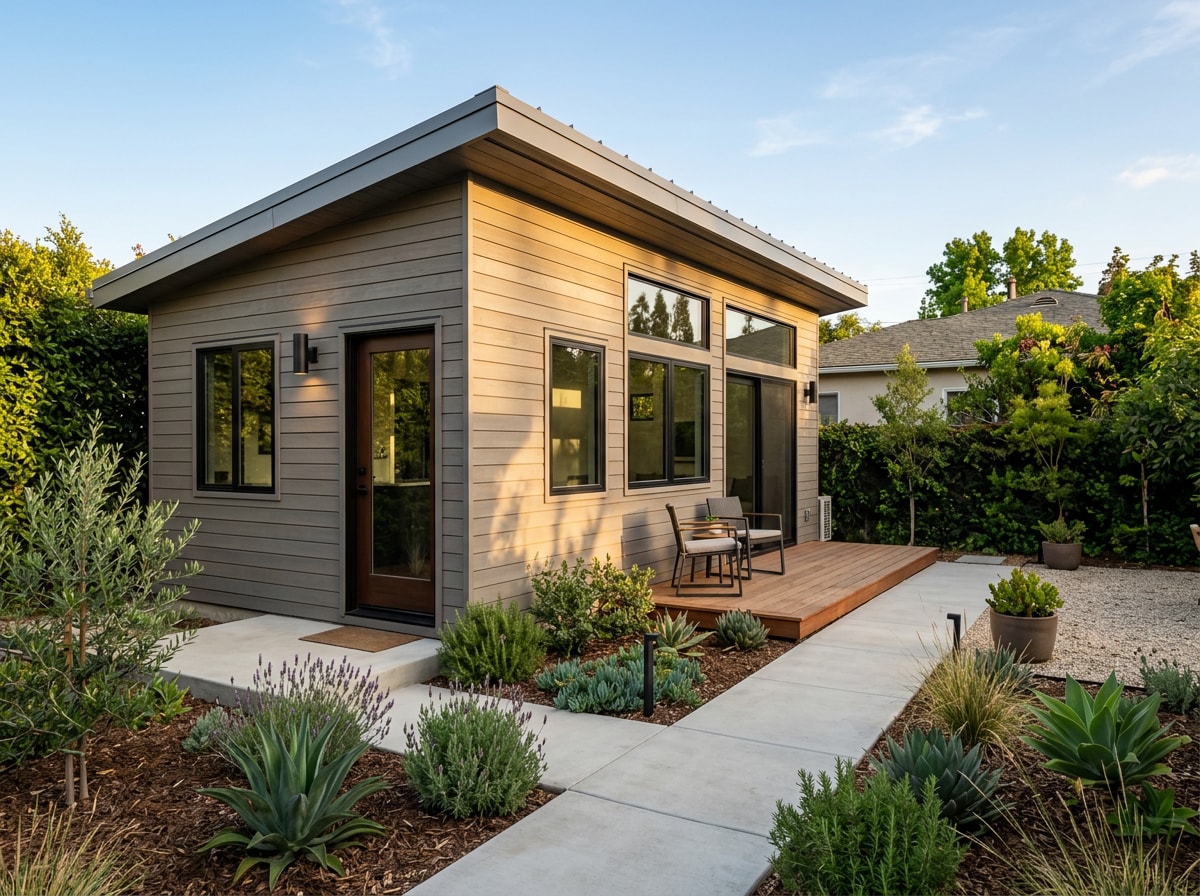
ADU projects in particular carry some of the widest fee ranges locally. Permits for ADUs and Junior ADUs must be approved or denied within 60 days under current state law , but plan check corrections and utility connections through the City of Los Angeles can still stretch a project's management timeline, which is part of why ADU fee percentages run higher than a straightforward addition. If you're budgeting one, our ADU building page breaks down scope and sequencing in more detail.
California also regulates how contractors can collect money before work starts. The down payment cannot be more than $1,000 or 10 percent of the contract price, whichever is less, for a home improvement job or swimming pool, excluding finance charges . A contractor asking for more than that upfront, regardless of their fee percentage, is a red flag worth walking away from.
What Drives Your Contractor's Final Price
The base fee percentage is only part of the equation. Several other factors push a North Hollywood contractor's final bid up or down, even for similar-looking projects.
- Experience and reputation. Highly rated, in-demand contractors often charge toward the top of the range, while newer or less-established contractors may price lower to win work.
- Licensing status. A low bid from an unlicensed or newly licensed contractor carries more risk than the percentage alone suggests, since licensed, bonded contractors build insurance and warranty costs into their fee.
- Project complexity and site conditions. Older Valley housing stock, tight lots, and hillside or flood-zone parcels can add coordination time that shows up in the fee, not just the hard costs.
- Permitting load. Projects requiring multiple City of Los Angeles permits (structural, electrical, plumbing, mechanical) demand more contractor time per dollar of construction cost.
Before comparing percentages, confirm the contractor holds an active, licensed general contractor status with the state. For a deeper look at how markup gets justified locally, see our companion guide on general contractor markup in North Hollywood.
Ready to compare a real quote against these ranges? Request a free estimate from our North Hollywood team, and we'll break down exactly what's hard cost versus fee before you sign anything.
FAQ
What Percentage Does a General Contractor Charge in North Hollywood, CA?
Most general contractors in North Hollywood charge between 10% and 20% of the total project cost, with 15%–18% typical for residential remodels. The exact figure depends on project size, scope complexity, and the contractor's experience level.
How Do I Know If a GC's Markup Is Reasonable?
Compare the quoted percentage against the 10%–20% local range, and ask for an itemized breakdown separating hard costs from the fee. Verify the contractor holds an active license before assuming a lower bid is the better value, since an unlicensed quote isn't a real comparison point.
Is It Cheaper to Be My Own General Contractor?
Self-GCing can save the percentage fee, but it shifts coordination, scheduling, and liability risk entirely onto you. For most homeowners, the time and risk involved outweighs the savings, especially on projects requiring multiple permits or trades.
Does the General Contractor's Fee Include the Subcontractors' Cost?
No. Subcontractor costs are a separate hard cost. The fee percentage is calculated on top of those costs, covering supervision, scheduling, and overhead rather than replacing what subcontractors are paid.
Does a Licensed Contractor Cost More Than an Unlicensed One?
Often, yes, and that's the point. Licensed, insured contractors build liability coverage, workers' comp, and warranty reserves into their fee. An unlicensed quote that looks cheaper leaves you personally liable if someone gets hurt on site or the work fails inspection.
What's Not Included in a General Contractor's Fee Percentage?
The fee percentage typically doesn't cover architectural or engineering fees, permit fees themselves, financing costs, furniture and fixtures you purchase separately, or landscaping unless it's explicitly scoped into the contract. Ask for a written list of exclusions before signing.
How Much Contingency Should I Budget Above a Contractor's Estimate?
Most contractors and designers recommend budgeting an additional 10% to 20% above the estimate for remodels, and toward the higher end for older homes where hidden conditions are more likely. New construction with a completed design typically needs less cushion.
For more on hiring a qualified team before you commit to a number, see our general contractor markup guide, or start with our homepage to see the full range of services we offer across North Hollywood and the San Fernando Valley.
This guide was prepared by the general contracting team at Builders Pathway, licensed and insured contractors serving North Hollywood and greater Los Angeles County. Questions about your project? Contact us for a free, itemized estimate.