General contractor percentage in Los Angeles County, CA typically runs 10% to 25% of total project cost, depending on the pricing model your contractor uses and how much risk the job carries. The exact number moves with your city's permit office, your home's age, and whether the bid is cost-plus or fixed-fee. Here's the math behind every range, plus the one factor most homeowners never think to check before they sign.
General Contractor Cost in LA County at a Glance
Most Los Angeles County general contractors price their work using one of four models. Each carries a different typical range.
| Pricing Model | Typical LA County Range | Best-Fit Project |
|---|---|---|
| Cost-plus (percentage) | 15%-25% of total cost | Remodels with unknowns, older homes |
| Fixed-price | Markup built into one quote | Clearly scoped new builds, ADUs |
| Time-and-materials | Billed as work progresses | Small repairs, phased projects |
| Hourly consulting | $50-$150/hour | Design review, project oversight |
If you want a straight comparison across contractors before you dig into the math, you can get a free estimate from our team and use it as a benchmark against other bids.
How Much Do General Contractors Charge in Los Angeles County?
General contractors across LA County typically charge a percentage of total project cost, most commonly between 10% and 20%. On a $200,000 project, that's a general contractor fee of $20,000 to $40,000, depending on complexity and overhead.
You'll see this number quoted differently depending on the source. Some guides cite 10% to 20% as a general range. Others cite 15% to 25% specifically for cost-plus arrangements. Both are accurate, they're just describing different pricing structures.
The spread exists because project risk varies so much across the county. Older housing stock in neighborhoods like Eagle Rock or unincorporated pockets near Altadena often hides outdated wiring or foundation issues that only surface once walls open up, pushing bids toward the higher end. Hillside zones and historic overlay districts add review cycles, too. Clearly scoped new construction tends to land lower.
On recent bids in Pasadena's hillside lots and in older Glendale homes, we've seen cost-plus estimates settle in the upper half of that range almost every time soils review or an unpermitted addition is involved. That pattern holds up more consistently than project size does.
Here's the project cost percentage math at three common budget sizes:
- $100,000 project: GC fee runs $10,000-$25,000
- $300,000 project: GC fee runs $30,000-$75,000
- $600,000 project: GC fee runs $60,000-$150,000
Larger projects don't always scale the percentage up. Many contractors drop their rate slightly on bigger jobs since fixed overhead spreads across a larger budget. If a bid comes in well above 25% without a clear reason, ask what's driving it before signing. For a closer look at how these numbers apply to your project, visit our general contracting services page.
Why Your City Within LA County Changes the Math
This is the part most cost guides skip, and it matters more in LA County than almost anywhere else in the state. Los Angeles County contains dozens of incorporated cities, each running its own building and safety department, plus large unincorporated areas governed directly by the county.
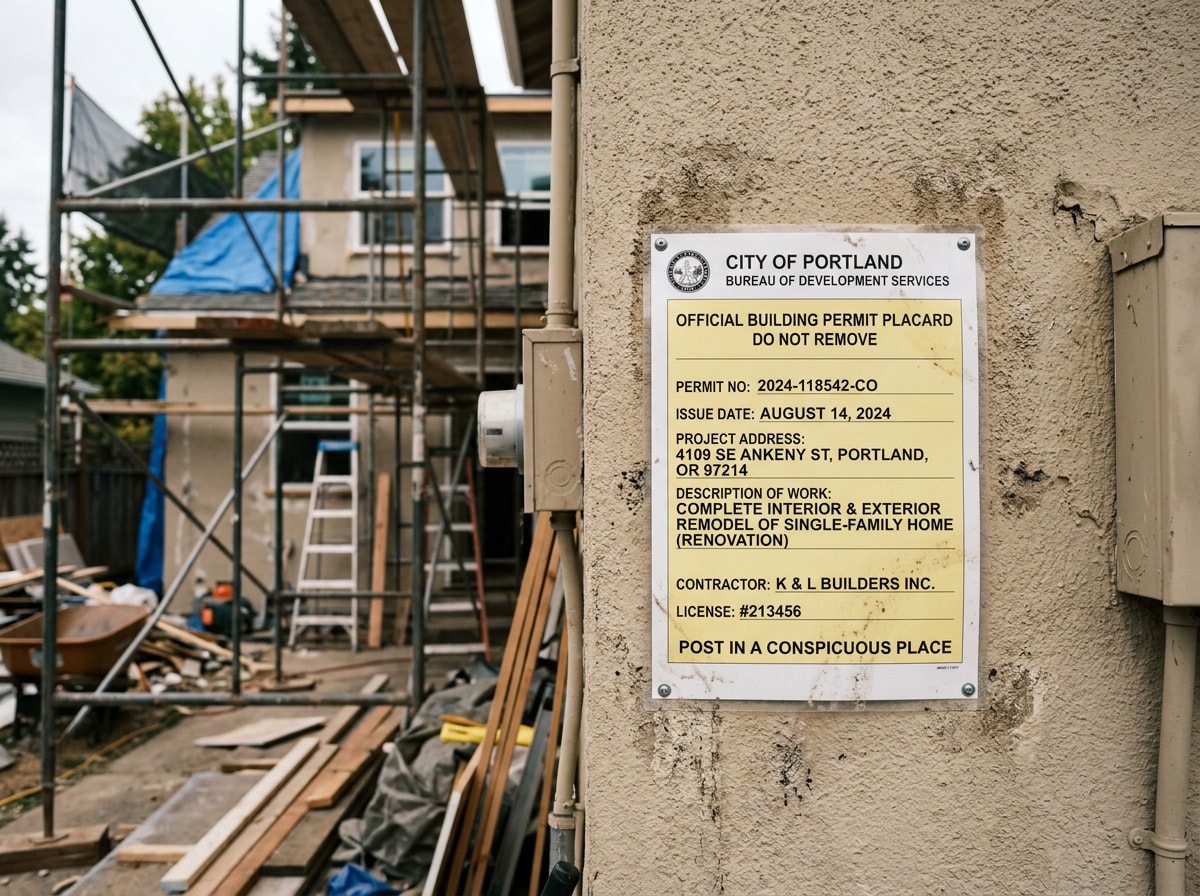
If your property sits inside the City of Los Angeles, your contractor files permits through the Los Angeles Department of Building and Safety. Glendale, Pasadena, and other incorporated cities each run their own separate building departments with their own review timelines and fee schedules. But if your property is in an unincorporated area, say parts of East LA, Altadena, or Marina del Rey, permits go through the LA County Department of Public Works Building and Safety Division instead.
Why does this affect your contractor's percentage? A GC who doesn't regularly pull permits in your specific jurisdiction will often quote higher to cover the learning curve and potential delays. A contractor who already knows your city's or the county's review process tends to price more tightly, because they're not padding the bid for uncertainty. Before comparing percentage quotes, ask each bidder how many projects they've permitted in your specific city or unincorporated district in the last year.
Understanding Cost-Plus vs. Fixed-Price Contracts
The word "percentage" in most LA County contractor searches really only applies cleanly to one of two dominant billing structures. Knowing the difference helps you compare bids that look nothing alike on paper.
The Cost-Plus Model
A cost-plus contract means you pay for actual labor and material costs, plus an agreed percentage for the GC's overhead and profit, typically 15% to 25% in LA County. Every invoice is itemized, so you see exactly what materials cost and exactly what the contractor's fee adds on top.
This model suits projects where surprises are likely: remodels in older homes, jobs involving demolition, or anything where full scope can't be nailed down until walls or floors come up. You carry more cost risk, but you get more transparency. The final fee moves with the final project total, so your number isn't locked in until the work is done.
The Fixed-Price Contract
A fixed-price contract sets the total cost before work begins. You get one number, and it doesn't change unless scope changes through a formal change order.
The markup is still there, it's just not itemized. It's baked into the flat quote instead of shown as a line item. To compare a fixed-price bid against a cost-plus one, ask the contractor to estimate raw labor and material costs separately, then subtract that from the total quote. Whatever's left is roughly their effective percentage.
2026 Los Angeles County Construction Costs by Project Type
Here's how typical LA County project budgets translate into a general contractor fee, using a representative 15% rate for comparison.
| Project Type | Typical LA County Cost Range | Estimated GC Fee (15%) |
|---|---|---|
| Kitchen remodel | $35,000-$85,000 | $5,250-$12,750 |
| Bathroom remodel | $18,000-$45,000 | $2,700-$6,750 |
| ADU construction | $150,000-$300,000 | $22,500-$45,000 |
| Room addition | $90,000-$220,000 | $13,500-$33,000 |
| Full home remodel | $150,000-$450,000 | $22,500-$67,500 |
These are starting points, not guarantees. Cost swings based on finish level, site access, and how much of the existing structure needs to be touched. Treat the table as a way to sanity-check a bid, not a substitute for a site visit. If you're pricing a specific project type, our kitchen remodeler, bathroom remodeler, and ADU building pages break down scope and typical timelines in more detail.
The General Contractor's 5 Core Responsibilities
A percentage fee isn't just profit. It covers the work that keeps a project moving without you managing a dozen moving parts yourself.
- Budget management — tracking costs against the agreed number as work progresses
- Subcontractor coordination — hiring, scheduling, and supervising electricians, plumbers, and framers
- Permit handling — securing approvals before and during construction, with the right department for your jurisdiction
- Scope translation — turning architectural drawings into a buildable sequence
- Quality and code compliance — making sure finished work passes inspection
That permit piece matters more here than almost anywhere else, since the right office depends on exactly where in the county your property sits. Trying to navigate submittals without that local experience is one of the fastest ways a project stalls for months. Our site preparation services cover the groundwork and permitting steps that typically precede any framing or remodel work.
How to Vet a General Contractor Before You Compare Fees
Comparing percentage quotes only matters if the contractor offering them is legitimate. A low bid from an unlicensed or underinsured contractor isn't actually a deal.
Verify the CSLB License First
Check license status with the Contractors State License Board before discussing pricing at all. Use the CSLB license lookup tool to confirm the license is current, free of disciplinary action, and that the business carries active workers' compensation coverage. This takes about five minutes. A contractor who hesitates when asked for their license number is telling you something important.
Watch for an Oversized Deposit
In California, for a home improvement contract, the down payment cannot be more than $1,000 or 10 percent of the contract price, whichever is less, for a home improvement job or swimming pool, excluding finance charges. This rule is published directly by the CSLB, and it applies regardless of how the contractor structures their percentage fee.
Here's how to tell the two apart on a bid:
- Deposit: a small, capped amount collected before any work starts
- GC percentage fee: earned progressively as the project advances, paid through scheduled draws tied to completed milestones
If a contractor blurs that line, ask for clarification in writing, and consider it a reason to keep shopping. For help comparing vetted contractors in your part of the county, check our Los Angeles County service area page, or see how we've handled permit-heavy jobs in Pasadena and Glendale.
Getting an Accurate Fee Estimate
The fastest way to know your real number is to get a scoped estimate rather than apply a generic percentage to a guess. We walk through this process in more detail in our guide to residential general contractor services in Los Angeles County, including how scope definition affects final pricing.
If you're ready to see where your project lands, request a free estimate and we'll walk you through the pricing model that fits your scope, whether that's cost-plus, fixed-price, or a hybrid. You can also browse completed work on our projects page or start from our homepage to see the full range of services we offer across the county.
FAQ
What's a typical general contractor markup in Los Angeles County?
Typical general contractor fee percentages run 15% to 25% over actual labor and material costs under a cost-plus structure. Fixed-price bids carry a similar markup, just built into the total rather than itemized separately.
Do general contractors in LA County charge by the hour or a percentage of the project?
Both exist. Some contractors bill hourly, roughly $50 to $150 per hour for consulting or oversight work, while most residential projects use a percentage-based cost-plus fee or a single fixed project price instead.
How much does a general contractor cost in Los Angeles County?
GC fees are typically 10% to 20% of total project cost, or built into a fixed-price proposal. For a $100,000 project, that means general contractor overhead of roughly $10,000 to $20,000.
Is the general contractor's percentage negotiable?
Somewhat. The percentage itself is usually less negotiable than the scope it's applied to. You'll get more movement by tightening the scope, bundling trades, or adjusting the payment schedule than by asking a contractor to simply lower their rate.
Does my fee change based on which city in LA County I'm in?
Indirectly, yes. The fee itself doesn't change by city, but contractors unfamiliar with your specific city's or the county's permit office often price in extra cushion to cover unfamiliar review timelines. A GC with recent permit history in your jurisdiction typically bids tighter.
How much contingency should I budget above a contractor's estimate?
Plan for 10% to 15% above whatever number you're quoted, regardless of pricing model. Older LA County properties in particular tend to reveal surprises once work begins.