A site preparation contractor Pasadena, CA homeowners hire before a build determines whether the next six months go smoothly or turn into change orders. The work that happens before framing starts, clearing, grading, drainage, and permitting, sets the ground rules for everything that follows. This guide breaks down what that work involves, what it tends to cost locally, and why Pasadena's hillside lots and permit process reward hiring a crew that already knows the terrain.
What a Site Preparation Contractor Actually Does
Site preparation covers every step performed on a parcel of land before vertical construction begins: clearing, grading, drainage setup, and permitting. It's the phase that determines whether a build sits on safe, stable, code-compliant ground.
Pasadena lots add layers most flat-valley sites never see. Many sit on expansive clay soils that shift with moisture. Others perch on hillside terrain above the Arroyo Seco. Older neighborhoods often hide utility lines that were never mapped to modern code.
We've graded lots across Linda Vista, the San Rafael Hills, and the flats south of the 210, and the pattern repeats: the lots that go over budget almost always skipped a proper soil or slope assessment up front. A contractor who reads these conditions before equipment shows up is doing risk management, not just dirt work.
Site Clearing & Debris Removal
Before grading equipment arrives, the lot has to be cleared. That means removing vegetation, debris, and any unwanted structures so the ground underneath is fully exposed and workable.
For a typical Pasadena project, expect your quote to include:
- Tree and stump removal
- General vegetation clearing
- Debris hauling and disposal
- Demolition of small existing structures (sheds, old fencing, cracked pads), depending on scope
Getting this step right sets up everything that follows. Rushing it usually means discovering a problem, root systems, buried debris, unstable fill, after grading has already started.
Grading & Excavation Services in Pasadena
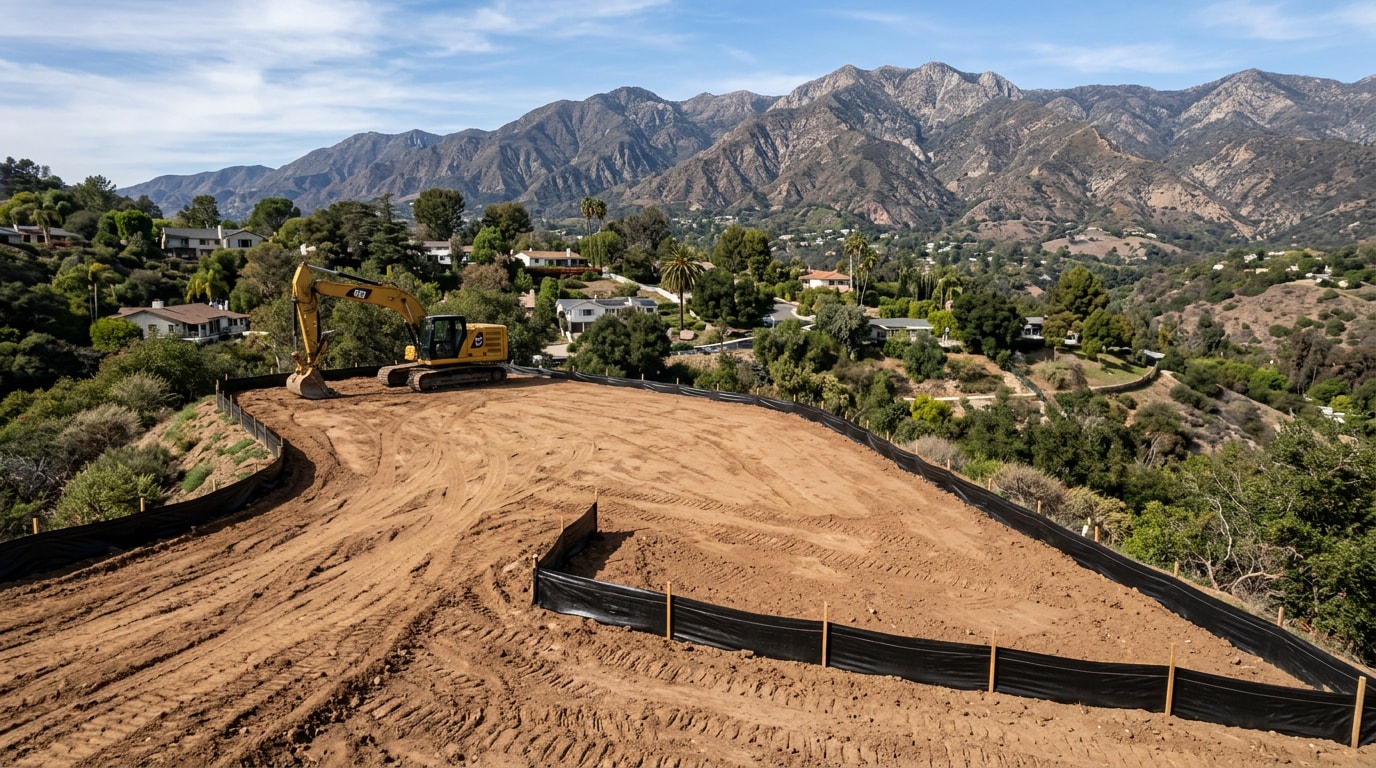
Once the lot is clear, grading and excavation take over as the core earthwork phase. This is where a grading contractor reshapes the land itself, cutting, filling, and compacting soil to prepare for foundations, driveways, and drainage across Pasadena's varied terrain.
Core Grading & Excavation Techniques
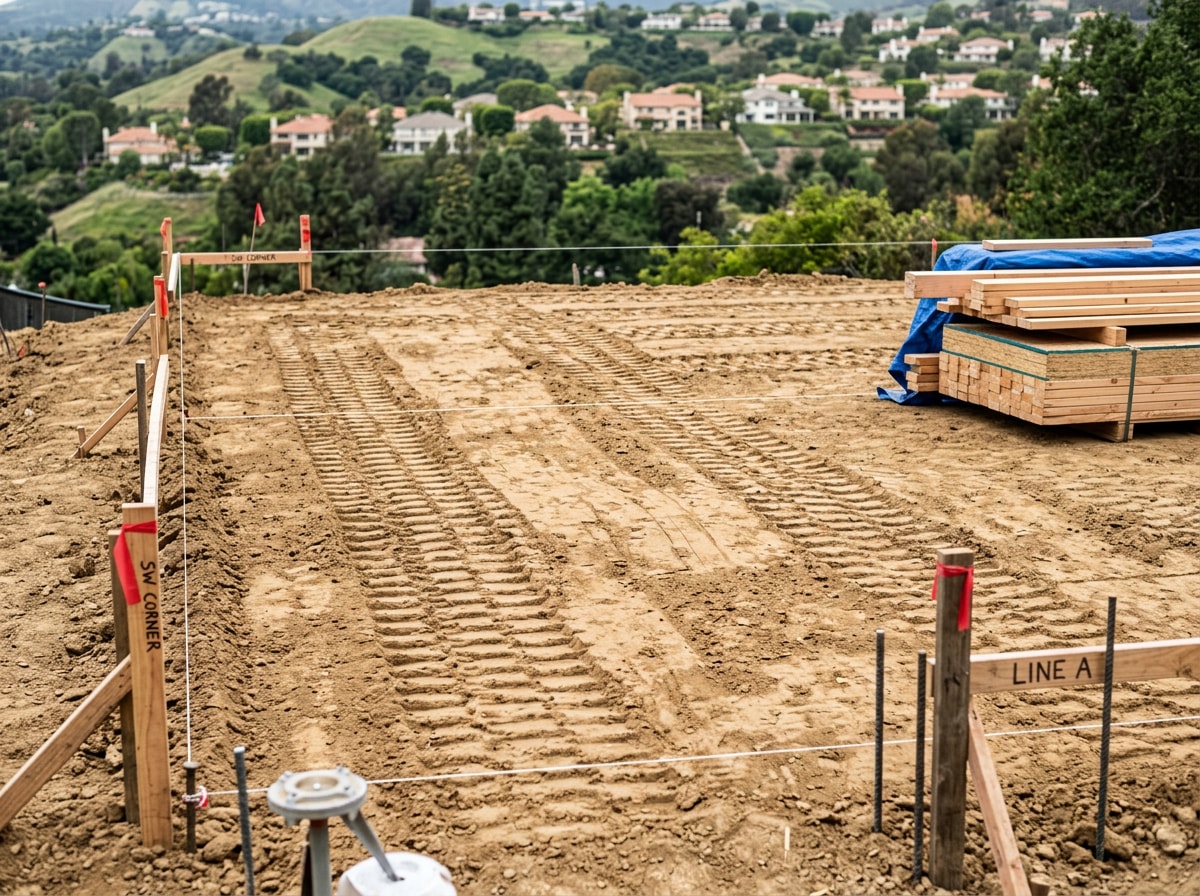
Cut-and-fill work is the backbone of most grading jobs. Excavators remove earth from higher areas and use it to raise lower sections, achieving the elevation and slope a project requires. Soil compaction follows, using rollers and plate compactors to increase load-bearing stability before anything gets built on top.
Pad preparation comes next: leveling and compacting the specific footprint where a foundation will sit. Roads and driveways get similar treatment, with sub-base layers graded and compacted before asphalt or concrete goes down.
Rough grading demands a contractor who reads slope conditions accurately. On Pasadena's hillside lots, a few degrees of miscalculation can affect drainage for the entire property, not just one corner of it.
Drainage & Erosion Control During Grading
Grading isn't finished until water has somewhere safe to go. Contractors build swales, trenches, and sloped channels during this phase to direct storm runoff away from structures and prevent standing water.
Erosion control measures, silt fences, sediment basins, hydroseeding, get installed during and immediately after grading to hold soil in place. This matters in Pasadena because rainy-season downpours hit hillside lots hard, and slopes near burn-scarred areas are especially prone to erosion and mudflow before vegetation has re-stabilized the ground.
Site Preparation Cost in Pasadena, CA
Site prep costs vary more than almost any other line item in a residential build, because lot size, terrain, and access change the equation for every property. On a straightforward flat lot with light clearing needs, site prep commonly lands in the low thousands. Add a slope, retaining requirements, or heavy demolition, and that number climbs quickly.
| Project scope | Typical cost driver | Relative cost |
|---|---|---|
| Flat lot, light clearing | Debris removal, basic grading | Lowest |
| Flat lot, standard build | Cut-and-fill, pad prep, drainage | Moderate |
| Hillside lot, standard grading | Slope surcharges, erosion control | Higher |
| Hillside lot with retaining walls | Geotechnical review, engineered walls | Highest |
In Pasadena and the greater San Gabriel Valley specifically, expect the higher end of any range on hillside lots. Slope surcharges, equipment mobilization, and the city's permit fee structure all push budgets up compared to flat valley-floor sites. Getting a detailed, itemized quote early is the single best way to avoid a mid-project surprise.
Labor Costs for Site Preparation
Labor is usually the largest single cost driver. Excavation contractors, land surveyors, and heavy equipment operators are typically all required on a given job, and Pasadena's labor market tends to run toward the higher end of regional rates, reflecting both construction demand and the specialized skill hillside and clay-soil sites require.
Ask any contractor for a labor breakdown separate from equipment and material costs. It's the fastest way to compare quotes apples to apples instead of guessing what's bundled into a lump sum.
Additional Cost Factors
Beyond labor and equipment, several add-ons shape a final quote:
- Land surveys and soil testing — provide essential data on grade and soil bearing capacity
- Utility locating — prevents costly accidental line strikes
- Permits and inspection fees — can add several hundred dollars to a Pasadena project
- Retaining structures — required on many hillside parcels once slope stability is assessed
Soil testing alone often pays for itself by catching stability issues before they turn into change orders mid-build. For a sense of how construction costs are trending nationally, the Census Bureau's monthly construction spending report tracks value-of-work-put-in-place data that many contractors use to benchmark material and labor trends.
Pasadena Permits & the City's Building Department
Pasadena is a fully incorporated city with its own building and planning department, which means every permit, plan check, and inspection for your project runs through the City of Pasadena rather than L.A. County. That distinction catches homeowners off guard if they've previously worked with county-based contractors.
The city's Permit Center handles development review and permit services directly, and its inspectors know the local housing stock, hillside zoning overlays, and historic district rules that can affect a grading or building permit. An experienced site preparation contractor manages this process directly, preparing applications, coordinating plan checks, and scheduling inspections, so you're not left navigating city hall alone.
For current requirements, the City of Pasadena Permit Center publishes official submittal guidelines and contact information. You can also browse our Pasadena service area page for neighborhood-specific project context, or see our full site preparation service page for a breakdown of what's included at each phase.
Building on Pasadena's Hillside Properties
Pasadena's hillside communities, Linda Vista, the San Rafael Hills, and the slopes above the Arroyo Seco, present a construction environment categorically different from the flat valley floor below. Lot access, grading requirements, soil stability, and drainage all become primary concerns before any structural work can even begin.
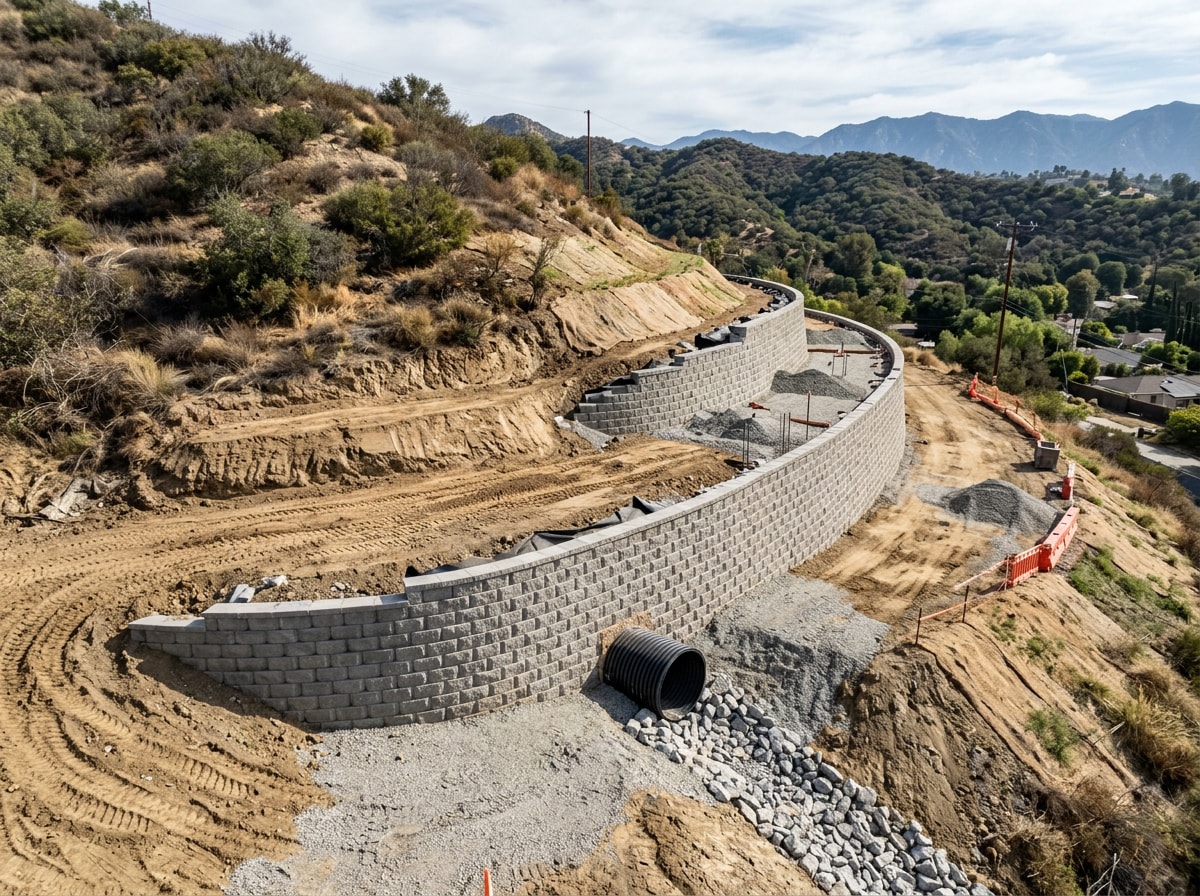
Homes on these parcels are often built into the slope itself, cantilevered over drop-offs, or set on foundations that require engineering review specific to that site's topography. A flatland lot in south Pasadena might need straightforward pad grading and standard drainage. A comparable hillside lot nearby can require retaining walls, geotechnical soil reports, and significantly more excavation, and in our experience bidding both types of lots, hillside site prep often runs 30% to 50% higher once those extras are priced in, with several added weeks for engineering review alone.
Slope stability isn't something to guess at. The California Geological Survey's landslide hazard mapping informs how engineers assess whether a hillside lot needs additional retaining structures or drainage design before grading begins.
Safety Standards Every Grading Crew Should Follow
This is a step most cost guides skip: excavation and trenching are federally regulated for a reason. Under OSHA's excavation standard, protective systems like shoring, sloping, or trench boxes are required once a cut reaches five feet deep, and a "competent person" must inspect conditions daily. On Pasadena's expansive clay soils, that inspection matters more than the paperwork suggests. Ask any contractor bidding your project how they handle protective systems on deeper cuts. A vague answer is a red flag worth taking seriously.
Why Hire a Professional Site Preparation Contractor
A land surveyor can technically coordinate parts of a site prep project, but most Pasadena homeowners are better served hiring a licensed contractor to plan and execute the whole phase. DIY work should generally stay limited to minor tasks: hauling small debris piles or trimming light vegetation.
Experienced local excavation and grading contractors bring accountability that pays off across the whole project. They understand Pasadena's soil behavior, know which inspectors to expect, and catch problems before they become expensive.
The practical payoff is real. Proper site prep keeps you compliant with local building codes and environmental regulations, and it keeps your project on schedule, since later construction phases can only move as fast as the ground beneath them allows. If you're weighing a full remodel or new build against a simpler scope, our homeowner's guide to residential general contracting in LA County walks through how site prep fits into the bigger project timeline.
Ready to get started? Request a free estimate and get a realistic timeline for your property. You can also browse recent work on our projects page or start from our homepage to see the full range of general contracting services we offer across the San Gabriel Valley.
FAQ
How long does site preparation take?
Most residential site prep takes anywhere from a few days to several weeks. Lot size, slope, weather, and how quickly Pasadena's permit review moves all affect the timeline, with hillside lots typically taking longer than flat parcels.
Do I need a permit for site preparation in Pasadena?
In most cases, yes. Grading and site work in Pasadena require permits through the city's Planning & Community Development Department. Very minor jobs, like small-scale debris or brush clearing, may be exempt, but it's worth confirming with the city or your contractor before starting.
What's the difference between grading and excavation?
Grading shapes and levels land to a desired slope or elevation, while excavation removes material to create space for foundations, utilities, or basements. They're often performed together during the same project phase, but they solve different structural problems.
Can I do any site preparation work myself?
Homeowners can generally handle very minor tasks, like clearing small brush piles or light debris. Anything involving grading, excavation, or structural demolition should go to a licensed, insured professional given the safety and code-compliance stakes involved.
How much does site preparation cost in Pasadena, CA?
Costs vary widely by lot size and terrain. Flat lots with light clearing needs cost the least; hillside lots requiring retaining walls, geotechnical reports, and extensive excavation cost the most. Get an itemized quote from a local contractor for an accurate number specific to your property.
Who is responsible for site preparation, the homeowner or the contractor?
The general or site preparation contractor typically manages clearing, grading, drainage, and permitting as part of the project scope. Homeowners are responsible for hiring a licensed, insured contractor and confirming permit requirements before work begins.