Civil constructors Los Angeles County property owners and developers hire handle the grading, utilities, and street-level work that has to happen before any building permit gets pulled. This guide breaks down the full service scope, which permit rules actually apply and where, and what separates a contractor who finishes on schedule from one who gets stuck in plan check. We pulled the permit and safety details straight from the agencies that enforce them, not from marketing copy.
Civil Construction & Site Development Services
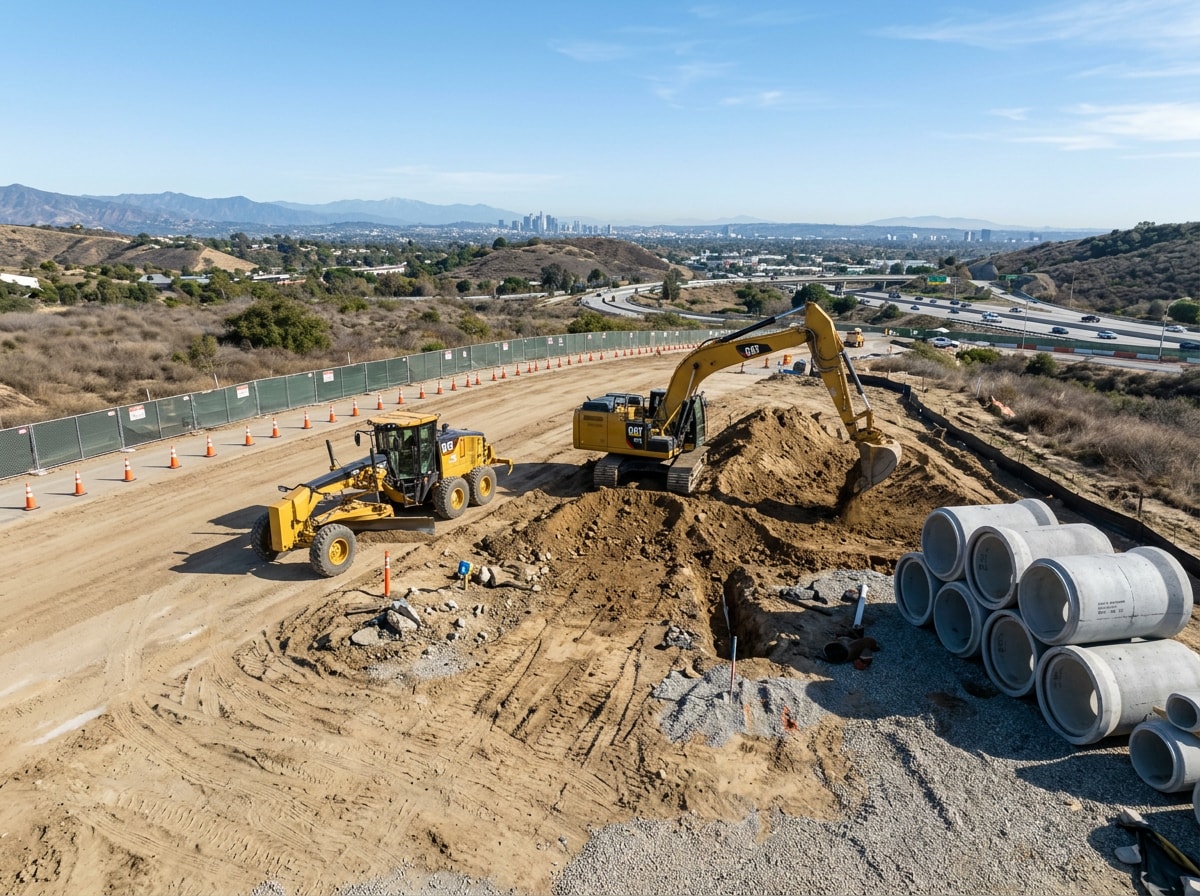
Civil construction in LA County covers everything that happens below and around a structure: grading, utilities, street-level concrete, and paving. It's the layer of work that makes a parcel buildable and ties it into public infrastructure before vertical construction starts.
Grading & Paving
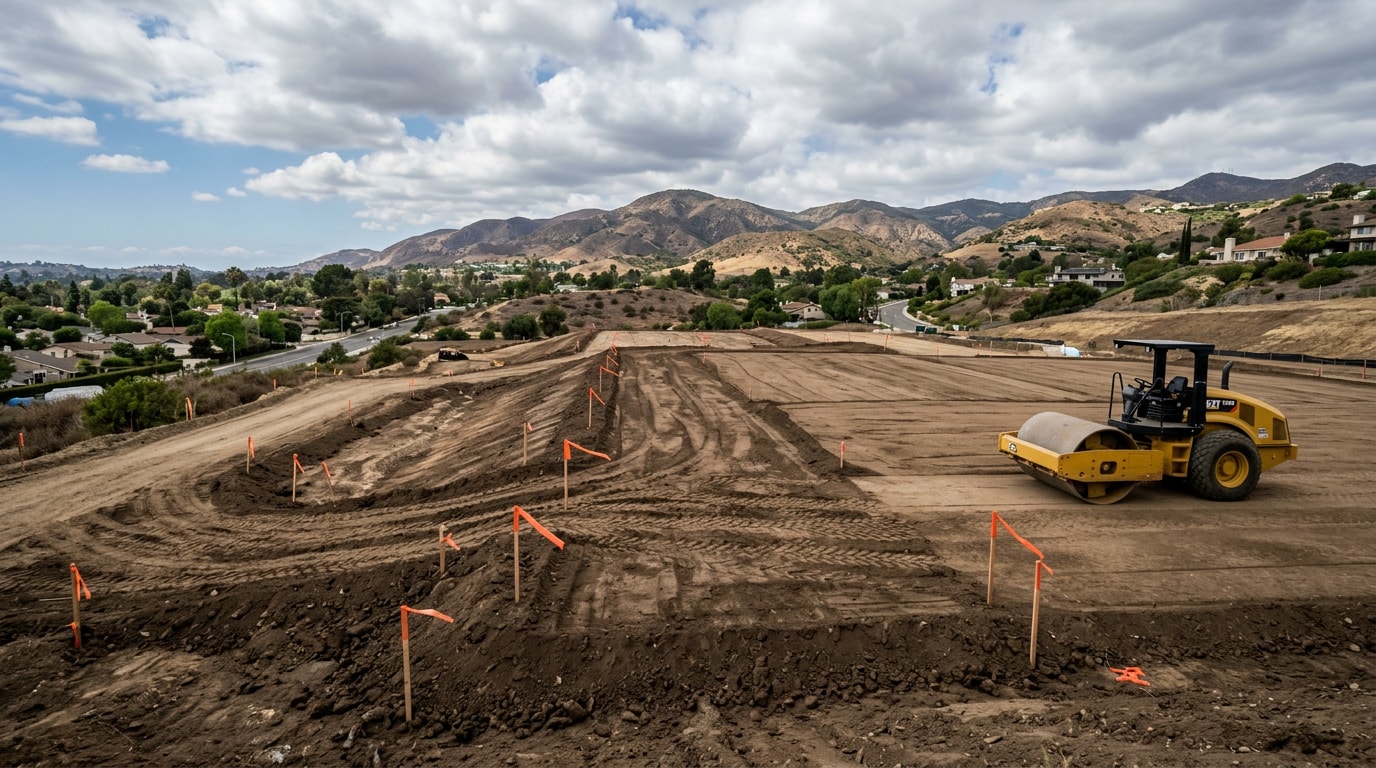
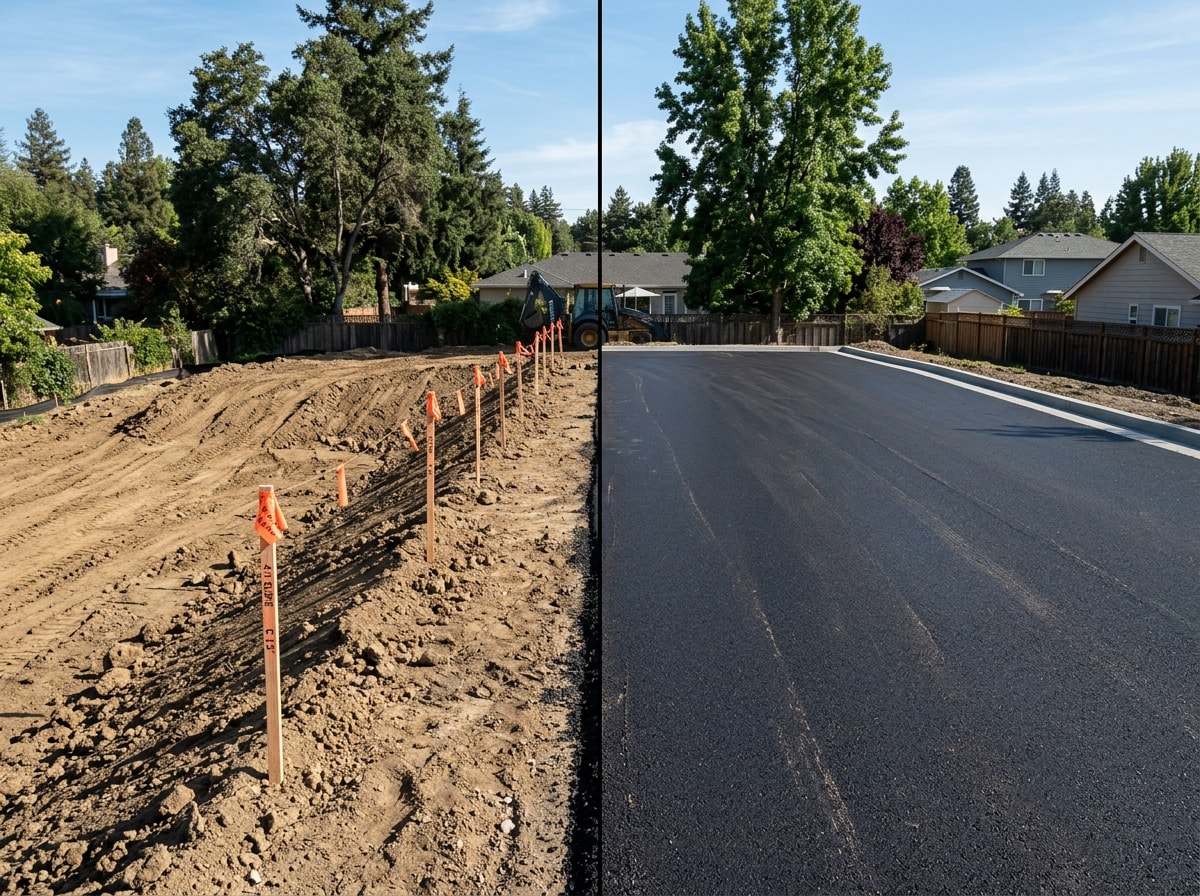
Site grading, compaction, and asphalt paving happen in a strict order, and skipping a step is the most common cause of cracked driveways and failed inspections. The sequence runs like this:
- Grade the site to the engineered elevations and drainage slopes called for in the plans.
- Compact the subgrade in lifts so it can carry pavement or a building pad load without settling later.
- Pave once compaction passes testing — base rock first, then asphalt, placed and rolled to spec.
A contractor offering civil construction grading work should walk you through all three phases as one continuous process, not three separate line items on a bid.
Street Improvement Permits: City of LA vs. LA County
This is where most property owners get tripped up: the permit letters you'll hear about (A, B, E, U, S, SD) are specific to the City of Los Angeles Municipal Code, not every jurisdiction in the county. If your project sits in an unincorporated county area, or in a separately incorporated city, a different agency reviews your plans.
Inside the City of LA, the Bureau of Engineering issues these permit classes:
| Permit Type | Typical Use |
|---|---|
| A Permit |
Repair, construction, or reconstruction of curbs, sidewalks, driveway approaches, or gutters where work matches existing grades without a survey or engineered plans
| B Permit |
Extensive public works improvements including street widening, changing street grade, bridges, retaining walls, and installation of sewer, storm drains, street lighting, and traffic signals
| E Permit |
Jobs in or adjacent to public streets for street light relocation, shoring, monitoring wells, soil boring, and private non-franchise conduits
| U Permit |
Issued to entities with authority to occupy the public right-of-way under a City or State franchise agreement; generally issued to utility companies only
| S Permit |
Required for a property owner to connect to the City of Los Angeles sewer system, along with associated sewerage facilities and bonded sewer fees
| SD Permit |
Required to connect to the City of Los Angeles storm drain system
|
For work in unincorporated LA County, LA County Public Works runs a separate Street Improvement Permit process. A typical application needs:
A letter of authorization when the project owner isn't the applicant
Contractor license number and insurance documentation
A plan approved from Regional Planning
A site plan approved by the Land Development Division
A cost estimate approved by the Land Development Division
Traffic control plans, when applicable
Registration through the county's EPIC-LA online system
Cities like Pasadena and Glendale run their own public works departments with their own submittal rules on top of this. If your project is in one of those cities, check our Pasadena or Glendale service area pages before you assume the LA city rules apply to your parcel.
Underground Wet and Dry Utilities (S, SD, E, and U Permits + Flood Control)
Installing or connecting sewer, water, storm drain, and dry-utility lines generally requires one of the permits above, and the agency involved depends on where the line ties in. Only approved Bonded Sewer Contractors can obtain sewer permits for construction in the public right-of-way , which is worth confirming before you sign a contract with anyone promising to pull a sewer connection themselves.
In LA County specifically, projects that touch drainage infrastructure often also need sign-off from the county flood control district, a layer many property owners don't expect until it shows up mid-permitting. Confirming your service area ahead of time helps identify which agencies will actually review your plans, since requirements shift from city to city and even between incorporated and unincorporated parcels within the same county.
Storm Drain Infrastructure
Storm drain lines are often treated as a standalone civil scope rather than folded into general utility work, because of how closely they're tied to flood control compliance. Installing or repairing storm drain infrastructure means tying new or existing lines into the public drainage system with capacity calculations that account for the site's runoff. Drainage work done without that calculation is a common source of flooding complaints after the fact.
Street Lighting & Traffic Signals
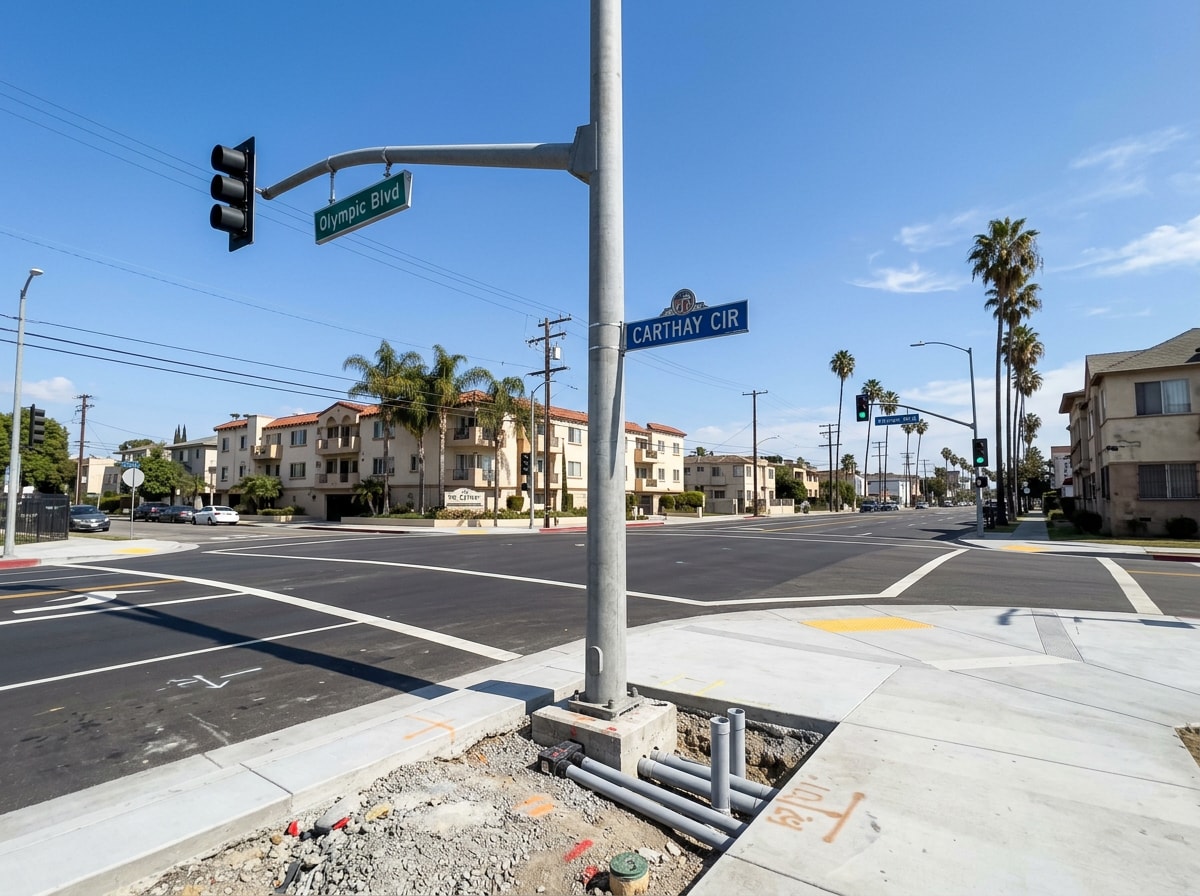
Street lighting and traffic signal work generally falls under a B Permit, while jobs like street light relocation or monitoring-well drilling in the right-of-way may fall under an E Permit instead. Projects involving traffic signals typically follow LADOT index plans, standardized engineering drawings that specify pole placement, conduit depth, and signal timing hardware so new work matches the rest of the city's system.
Projects of this type almost always require coordination across multiple site preparation services rather than a single standalone crew.
Curbs, Gutters, Sidewalks, Driveways & Alley Construction
This is the visible "finish layer" of street-level civil work: curb and gutter construction, sidewalk installation, and commercial driveway approaches poured to match the public right-of-way grade. Alley construction and repair fall into the same category. All of it has to tie into existing grades cleanly, which is why it's sequenced last, after grading and utility work is already complete.
Sealing, Striping & Building Pads
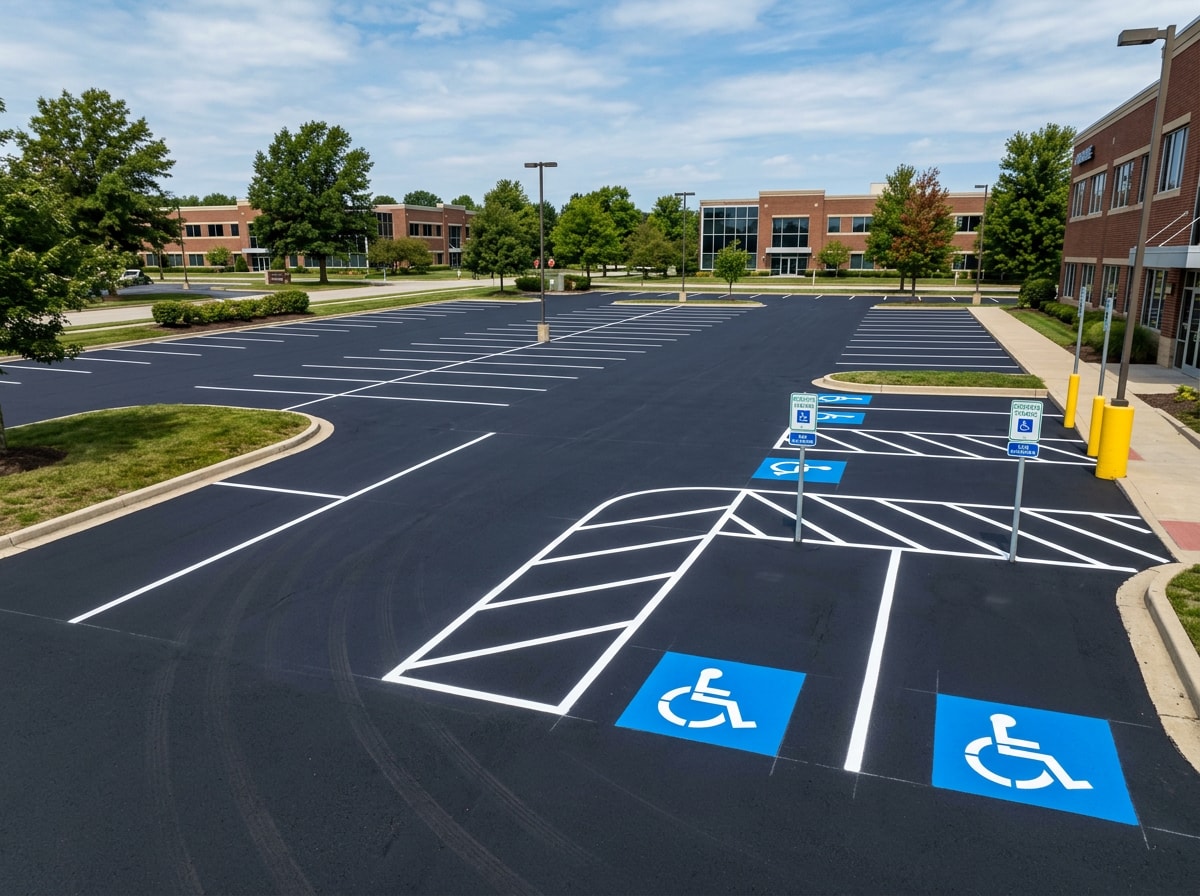
Parking lot sealing and striping close out a paving project, protecting the asphalt surface and marking traffic flow, accessible parking, and loading zones. ADA-compliant striping isn't optional on commercial lots; spacing, slope, and signage all have to meet accessibility standards. Building pad excavation happens earlier in the timeline. It's the precision grading step that prepares a specific footprint for foundation work.
Specialty Structural & Subterranean Construction Services
Not every civil scope stays at street level. Some projects need work below grade or structural reinforcement that goes beyond basic site prep: demolition, shoring, retaining walls, and subterranean construction all fall here.
Demolition, Drilling & Foundation Work
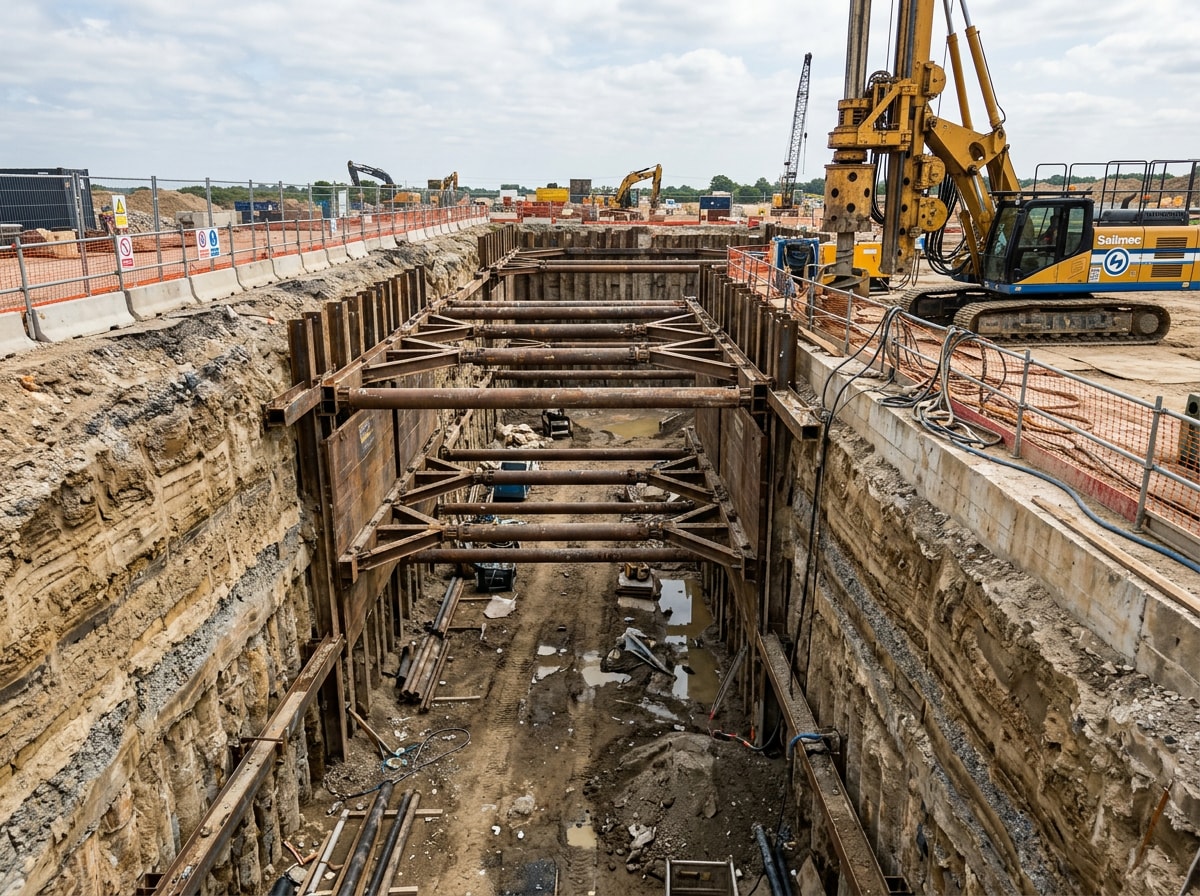
Before a new foundation goes in, existing structures or slabs often need to come out. A demolition contractor typically handles that prep work, followed by drilling and shoring if the excavation is deep enough to need temporary support. Foundation repair and retrofitting round out this sequence, addressing settlement, cracking, or seismic upgrades on existing structures.
Excavation deeper than a few feet is one of the most regulated parts of this work for good reason. 29 CFR 1926.650, 29 CFR 1926.651, and 29 CFR 1926.652 are the applicable OSHA standards governing trenching and shoring, and no worker should enter a trench that hasn't been properly inspected first . A contractor who can't speak specifically to how their OSHA excavation program works isn't someone you want running a deep cut near an occupied building.
Retaining Walls & Subterranean Construction
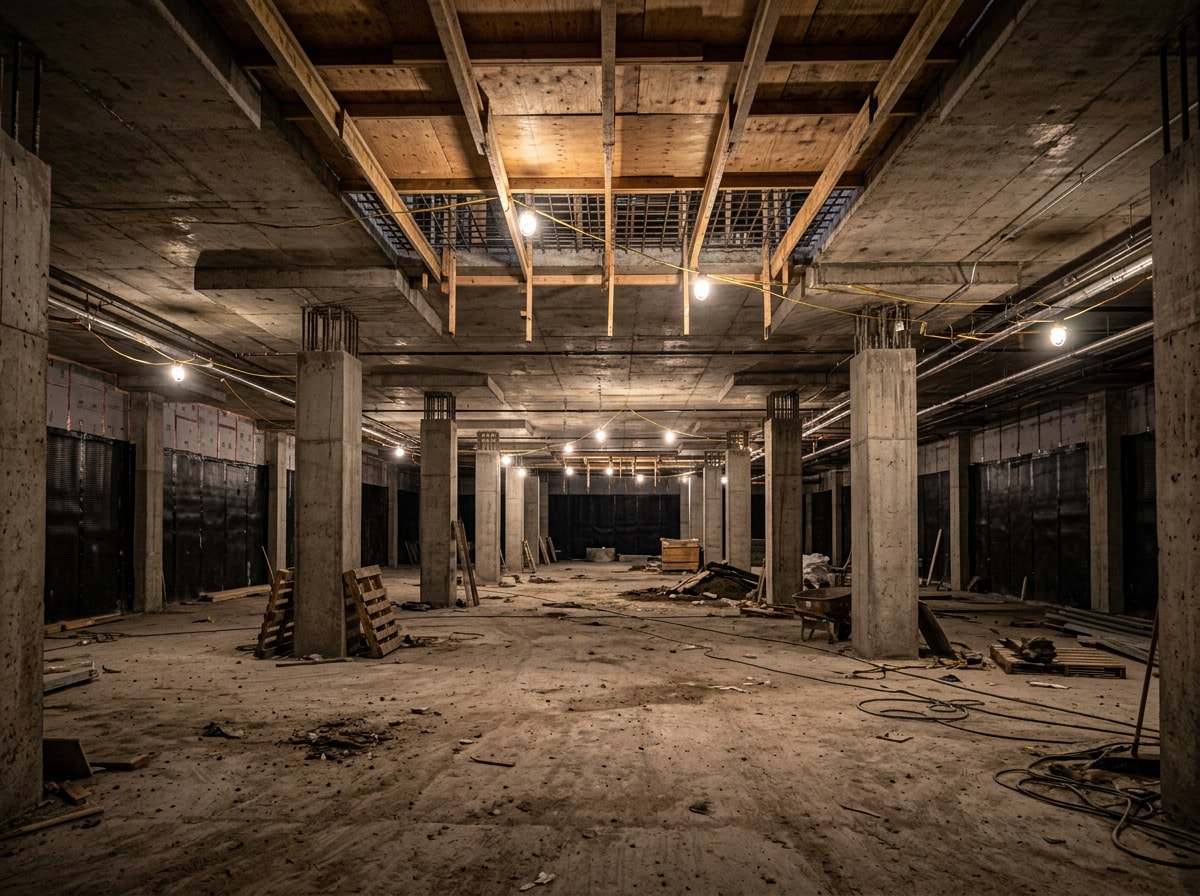
Retaining wall construction manages soil movement on sloped or cut lots and is engineered to specific soil-pressure calculations rather than built to a standard template. Subterranean construction, underground parking garages, and basement levels follow similar logic at a larger scale, requiring shoring, waterproofing, and structural engineering coordinated well before excavation starts.
Construction Engineering & General Contracting Oversight
Construction engineering covers the technical plans, grading and drainage design, and trenching and shoring calculations, that civil work is built from. General contracting oversight sits on top of that, coordinating trades and scheduling so engineered plans actually get built as designed. On larger projects, the two functions often sit with the same firm to avoid miscommunication between design intent and field execution. Our general contractor services page covers how that handoff works on a typical project.
Pre-Construction & Construction Phase Scope
Hiring a civil constructor usually means working through two distinct phases: everything that happens before a shovel hits dirt, and everything managed once work is underway.
Pre-Construction: Site Evaluation, Accurate Bids, Permitting & Traffic Control
A proper pre-construction phase starts with a site evaluation covering soil conditions, existing utilities, and access constraints. That evaluation feeds an accurate bid instead of a rough estimate that changes once work starts. Permitting gets handled here too, along with traffic control plans for any work affecting public streets or sidewalks. For a closer look at how this phase runs on an actual LA County job, see our site preparation contractor guide.
Skipping this phase is the most common reason civil projects run over budget. Request a quote with your site details before you commit to a scope.
Construction Phase: Scheduling, Site Logistics, Safety Program, Materials & Quality Control
Once construction begins, a civil contractor is managing five things at once: the schedule, site logistics (material staging, equipment access), a safety program, material procurement, and quality control inspections.
The safety program matters more here than on a typical building site, since civil work often happens in or near live public rights-of-way with vehicle and pedestrian traffic nearby. A competent contractor should be able to walk you through how their program meets or exceeds OSHA's baseline.
Choosing a Civil Constructor in Los Angeles County
I'm Daniel Reyes, General Contracting Lead at BuildersPathway. I've walked permit counters at both the City of LA Bureau of Engineering and LA County Public Works on the same project in the same week, which is exactly the kind of overlap that trips up property owners who assume "LA County" means one set of rules. It doesn't, and that's the single most common misunderstanding we clear up on a first site visit.
An experienced civil contractor in this market should be able to point to a specific license number, a verifiable history of completed public and private projects, and direct experience navigating the layered permitting agencies described above, not just general years-in-business claims. California classifies contractor licenses by letter: Class A covers general engineering, Class B covers general building, and C-xx covers specialty trades like electrical or plumbing . Civil site work typically falls under Class A. Before you sign anything, run the contractor's license through the CSLB's free lookup tool and confirm the classification matches the scope. Every active California contractor is also required to carry a $25,000 contractor license bond , which the same lookup will show.
If you're vetting a licensed general engineering contractor, ask for examples of completed street improvement or utility projects in the specific city or unincorporated area where your project sits. Local experience with the right agencies saves real time during plan check. You can see examples of completed work on our projects page, or start at our homepage to see the full range of services we coordinate on civil and vertical builds alike.
FAQ
What Is a Civil Contractor?
A civil contractor builds and repairs the infrastructure that supports a site or a public right-of-way: grading, utilities, drainage, and paved surfaces, rather than the building itself. This is distinct from a general building contractor, who focuses on the structure above the foundation.
What's the Difference Between a Civil Contractor and a General Contractor?
A civil contractor handles site work: grading, utility trenching, street improvements, and drainage. A general contractor manages the actual building construction, from foundation to roof. On larger developments, both are often working on the same project at overlapping stages, coordinated through a shared schedule. Our residential general contractor guide covers that handoff from the building side.
What Do Civil Contractors Do?
Civil contractors handle site grading, underground utility installation, street improvements, storm drain and drainage work, and asphalt paving. Many also manage related scopes like curb and gutter construction, sidewalk installation, and parking lot striping. The exact mix depends on the project, but these core services are the common thread.
How Much Does a Civil Construction Permit Cost in Los Angeles County?
Costs vary widely based on permit type (A, B, E, U, S, SD, or a county Street Improvement Permit) and total project valuation, so there's no single flat fee that applies across the board. B Permits tied to larger street or utility work generally cost more than A Permits for minor driveway or sidewalk repairs. Always confirm current fee schedules with the agency that actually has jurisdiction over your parcel, since City of LA and LA County fees are set and updated separately.
How Do I Verify a Civil Contractor's License in California?
Use the CSLB's free online lookup tool at cslb.ca.gov. Search by license number, business name, or personnel name to confirm the license is active, check the classification (Class A for general engineering work), and see bond and complaint history before you sign a contract.