If you're comparing general contractor vs builder cost in La Cañada Flintridge, CA, the job title on the business card matters less than the pricing model behind it. General contractors typically charge a percentage-based fee to manage your project, while builders price by the square foot for hands-on construction labor. This guide breaks down both cost structures with real numbers so you can match the right professional to your remodel or custom build before you sign anything.
General Contractor vs. Builder: What Each One Actually Does
What Is a General Contractor?
A general contractor oversees a construction job from permits through final walkthrough. They hire and schedule subcontractors, track the budget, and keep inspections moving, but they rarely swing a hammer themselves.
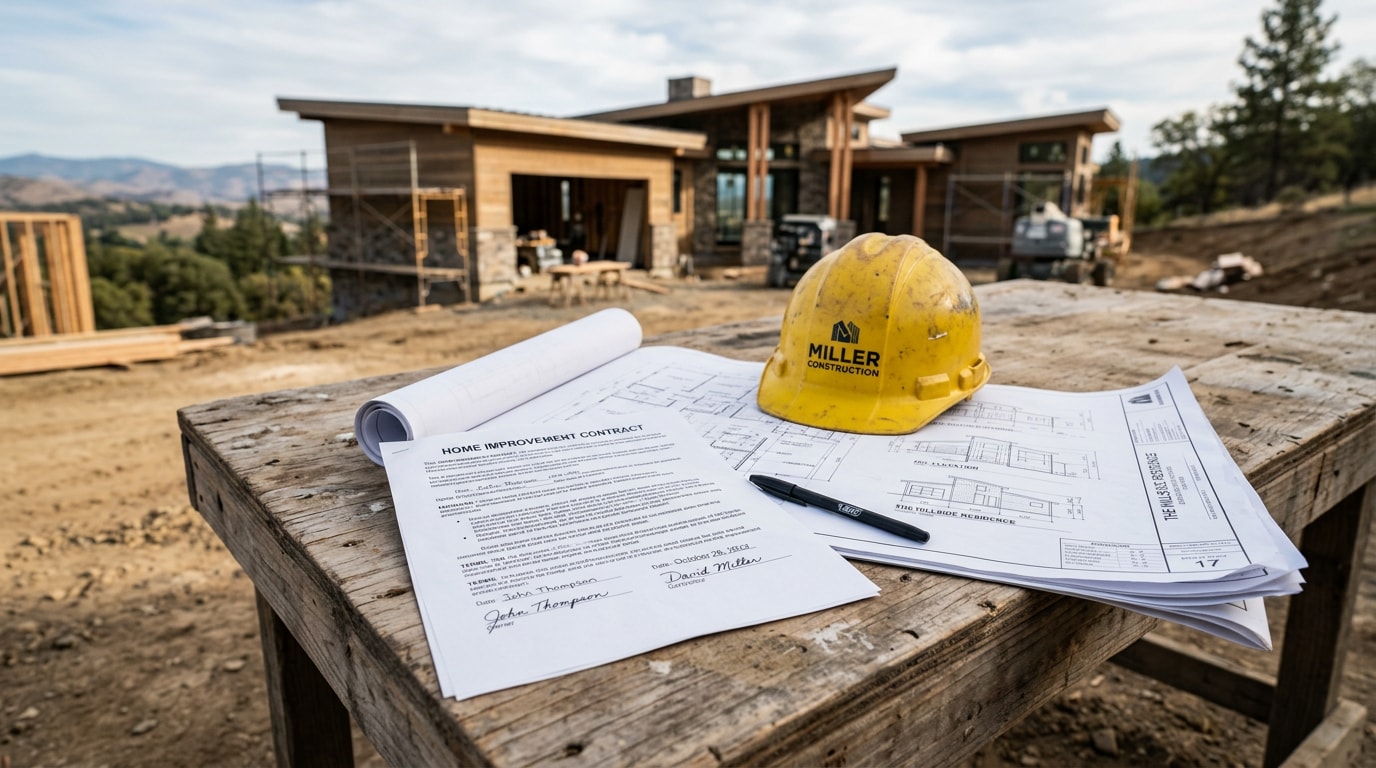
That coordination role is why general contractors matter most on multi-trade jobs. They pull permits, book inspections, and make sure the electrician shows up after the framer and before the drywall crew. California requires a licensed contractor on most projects above a set dollar threshold, so verifying that license through the Contractors State License Board is a non-negotiable first step before any contract gets signed.
If your project leans toward whole-project management rather than hands-on building, review our general contractor services or the specific scope covered under general contracting.
What Is a Builder?
A builder is the construction professional who physically builds the structure, typically stepping in once architectural plans and permits are finalized. Builders, sometimes called home builders or custom builders, specialize in framing, finishing, and assembling the structure itself.
Unlike a GC, a builder is often part of the labor crew rather than an office-and-schedule manager. Custom builders are common on ground-up projects where a homeowner wants direct control over layout and finishes from the foundation up. Our custom home builder team and custom home building services both fall under this hands-on category.
Builder vs. General Contractor: Who Does What
Builders handle the physical frame and structure. A general contractor functions more like a project manager who doesn't personally install HVAC, electrical, or plumbing; those tasks go to subcontractors the GC hires and supervises.
Project type shapes who you actually need:
- New custom homes and ground-up builds tend to favor a builder, or a builder-GC hybrid, since the work is sequential and labor-heavy from day one.
- Remodels and renovations touching multiple systems (a kitchen gut job that also needs electrical and plumbing updates, for example) usually call for a general contractor's trade coordination.
- Specialization matters too. A builder who has spent two decades framing custom homes isn't necessarily set up to manage five subcontractors on a tight condo renovation timeline, and the reverse is just as true.
General Contractor vs. Builder Cost Breakdown
A general contractor typically charges 10% to 20% of the total project cost, or in some markets a daily rate of $300 to $500 plus $150 to $250 per day for each subcontractor on site. For a $150,000 remodel, that markup alone can run $15,000 to $30,000 before materials and labor are factored in.
Builder cost works differently. Hands-on labor nationally runs $40 to $200 per square foot, though that baseline shifts with local labor rates, permitting complexity, and site conditions. On the new-construction side, the National Association of Home Builders' 2024 Cost of Constructing a Home survey found the average builder profit margin was 11% in 2024, up from 10.1% in 2022 , with overhead and general expenses running separately on top of that.
| Pricing Model | Typical Range | What It Covers |
|---|---|---|
| General contractor fee | 10%–20% of project total, or $300–$500/day + $150–$250/day per sub | Permits, scheduling, subcontractor coordination, project management |
| Builder labor cost | $40–$200 per sq ft (national baseline) | Framing, finishing, hands-on construction |
| Builder profit + overhead (new build) | 11.0% profit + overhead on top, per NAHB 2024 data | Built into a builder-sold home's final price |
These are ranges, not guarantees. Final pricing depends on scope, finish level, and site conditions, so treat any flat quote given without a walkthrough with some skepticism.
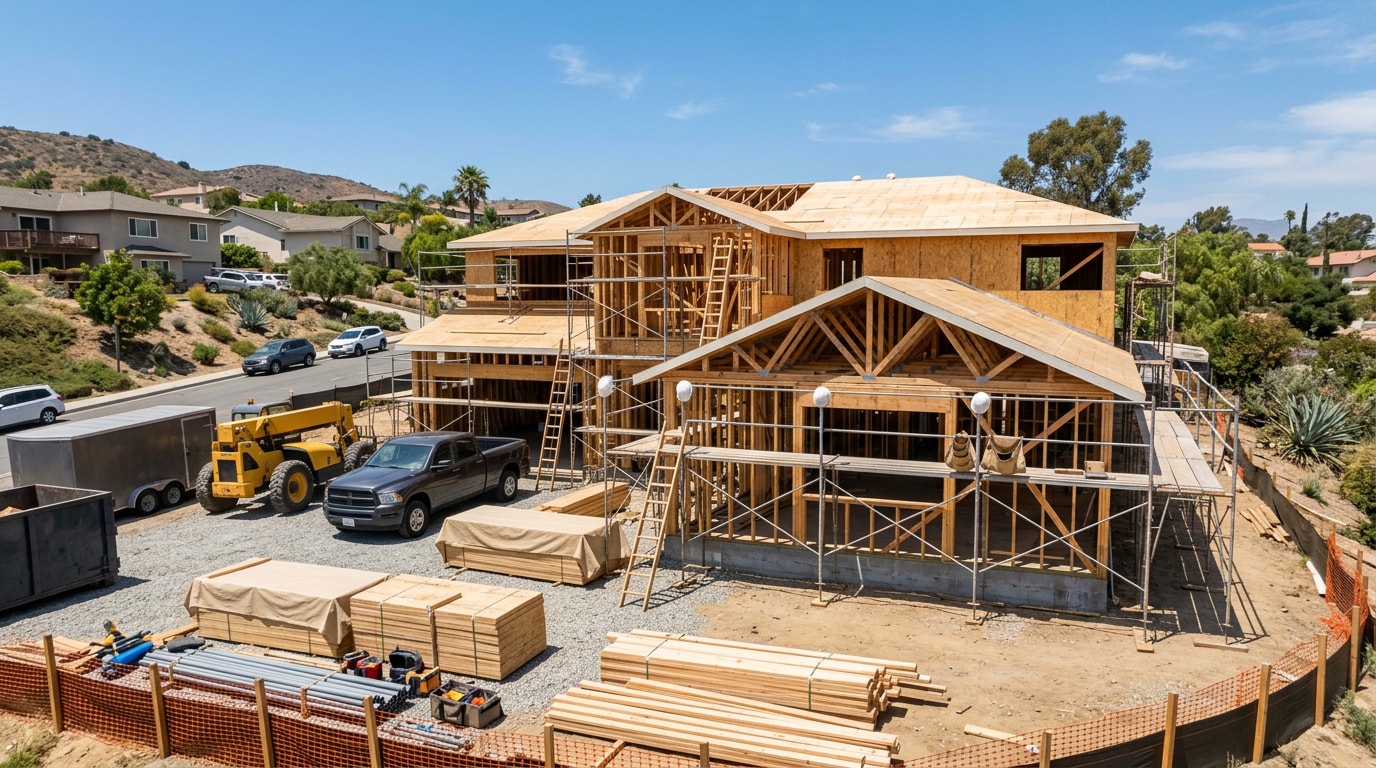
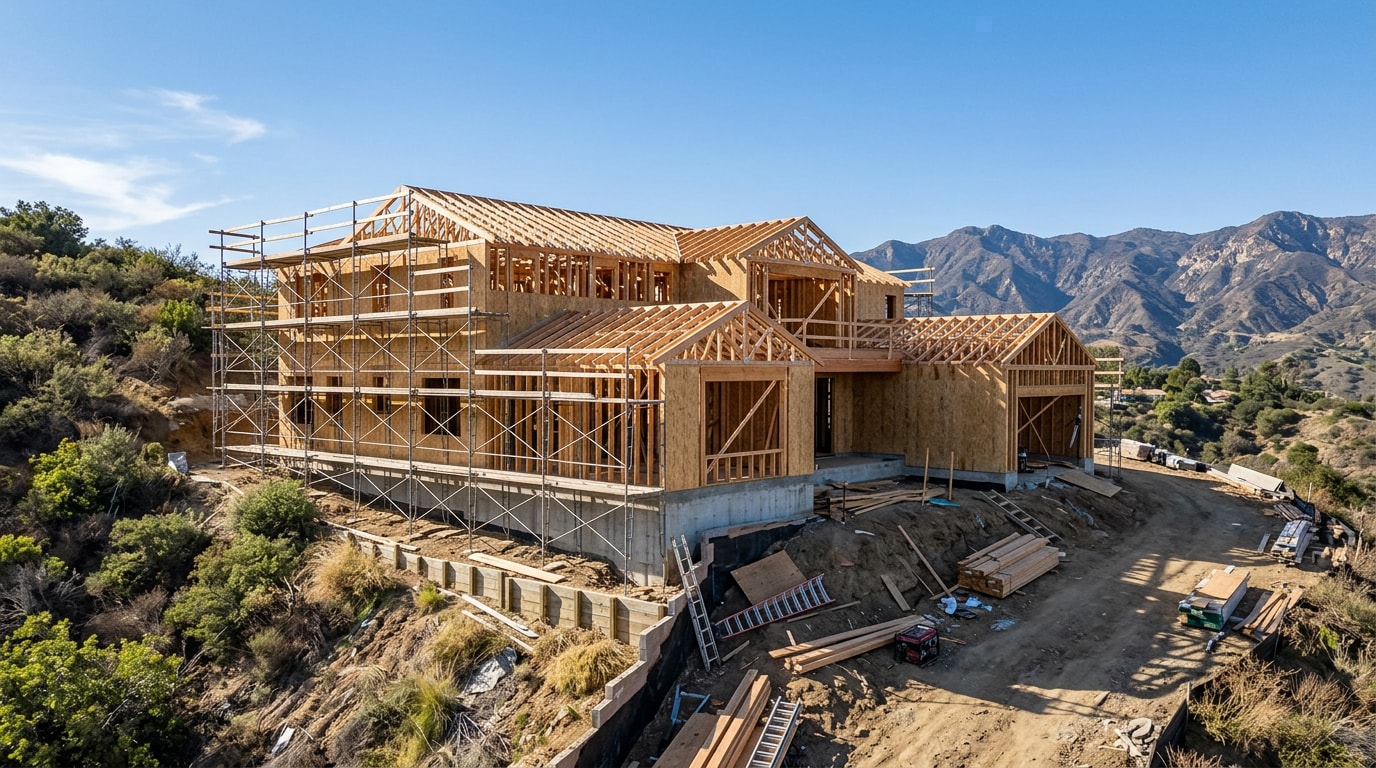
Hillside lots change the math further. Projects we've bid in the Flintridge Hills and the streets near Descanso Gardens routinely carry higher site preparation costs than flatland lots elsewhere in Los Angeles County, since slope stabilization, drainage, and soils reports add engineering steps before the first stud goes up. That's a cost driver a national per-square-foot average simply won't capture.
What Drives Local Cost Differences in La Cañada Flintridge
A few foothill-specific factors push both GC fees and builder costs above flatter, denser neighborhoods:
- Slope and soil conditions. Hillside lots often need grading, retaining walls, or geotechnical review before standard framing can start.
- Local permitting steps. The City's Community Development Department, Building & Safety Division reviews building, grading, and drainage permits separately, which can add time to a schedule a flatland project wouldn't face.
- Lower housing density. Fewer active crews working the immediate area can mean less local competition on bids compared to denser parts of Los Angeles County.
Mistakes to Avoid When Hiring a General Contractor or Builder
The most common hiring mistake is matching the wrong title to the job: bringing in a builder when the project actually needs multi-trade management, or hiring a GC for a straightforward new-construction build where a builder's direct labor would cost less. Both roles exist for a reason, and swapping them usually means paying for coordination you didn't need, or missing coordination you did.
Before signing anything:
- Verify the license. Run the name through the CSLB's free lookup tool before any money changes hands.
- Confirm permits are included. Skipping or misunderstanding permit requirements is a frequent, expensive error on additions and structural remodels.
- Read the scope line by line. Know exactly which tasks, materials, and change-order terms are covered before work starts.
Our guide on questions to ask a general contractor in La Cañada Flintridge walks through the specific questions worth asking at the bid stage, before you've committed to either path.
Which One Should You Hire?
If you're building a brand-new house and want full customization from the ground up, a builder is usually the better fit. If you're renovating or remodeling a space that touches multiple trades, electrical, plumbing, structural, a general contractor's project management earns its keep.
A short checklist helps narrow it down:
- New construction vs. remodel: Ground-up builds lean builder; renovations lean GC.
- Customization needs: Want a fully custom home from scratch? A builder gives more direct control over the build.
- Single point of contact: Want one person managing permits, inspections, and five different subcontractors? A GC's coordination role is worth the markup.
Ready to compare real numbers for your own project? Get a free estimate and we'll walk the scope with you before quoting anything. You can also browse recent work on our homepage to see the range of projects we handle across La Cañada Flintridge and the surrounding foothills.
FAQ
What is the main difference between a builder and a general contractor?
A builder physically constructs the structure. A general contractor manages the overall project, coordinating subcontractors, permits, and schedules rather than doing hands-on labor.
Is a builder cheaper than a general contractor?
It depends on the project. General contractors are often more cost-effective for renovations since they bring in trades only as needed. Builders handle full construction projects start to finish, which usually involves higher overall costs on a ground-up build.
What percentage do general contractors charge in California?
Most general contractors charge 10% to 20% of the total project cost, or a daily rate of $300 to $500 plus $150 to $250 per day for each subcontractor on site. The exact figure depends on project complexity and region.
Do I need a licensed contractor for a remodel in La Cañada Flintridge?
Yes, for most work above California's minimum project threshold. Always confirm active license status through the CSLB before signing a contract, and check that permits are pulled through the city's Building & Safety Division before construction starts.
Can the same company act as both builder and general contractor?
Yes. Some companies offer both hands-on building and full project management, and a general contractor may eventually take on land acquisition and development, effectively shifting into a builder role over time. Ask directly which role the company will play on your specific project.