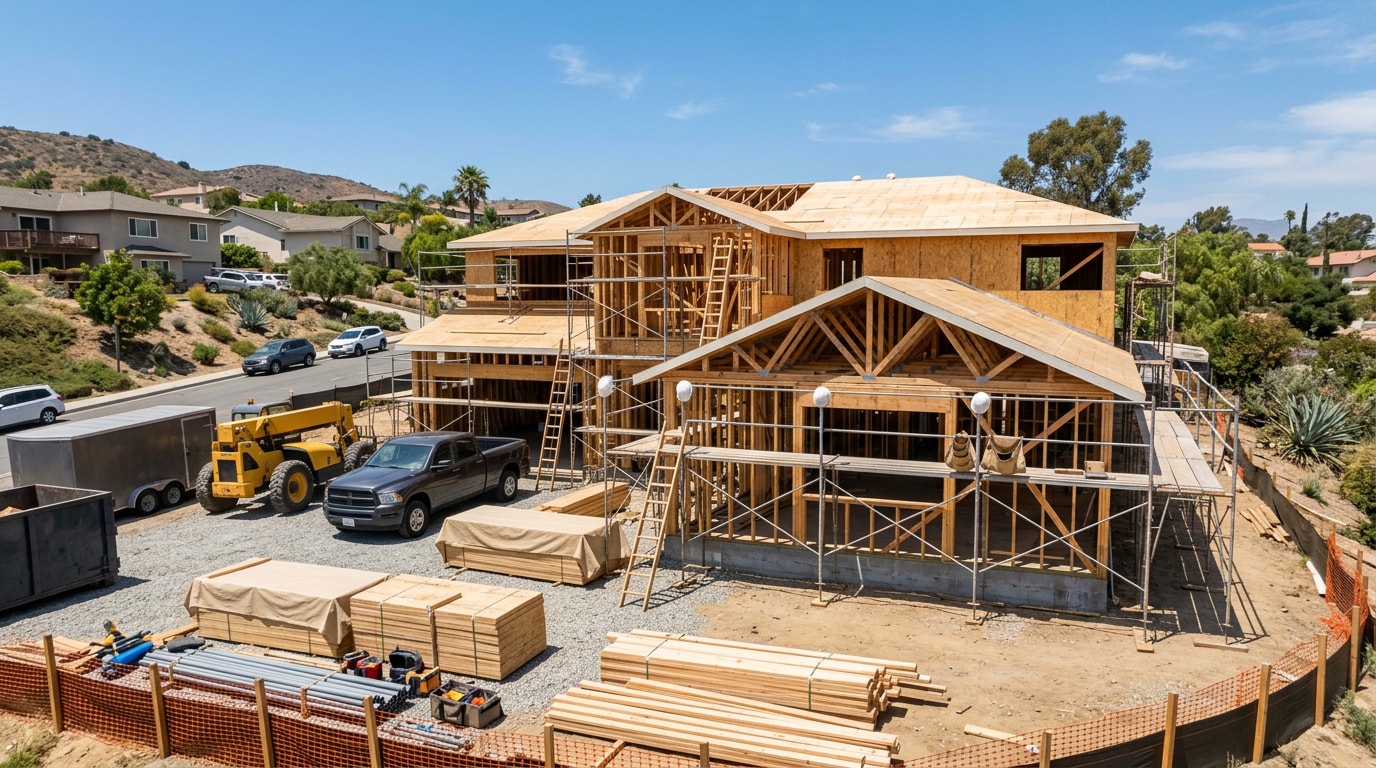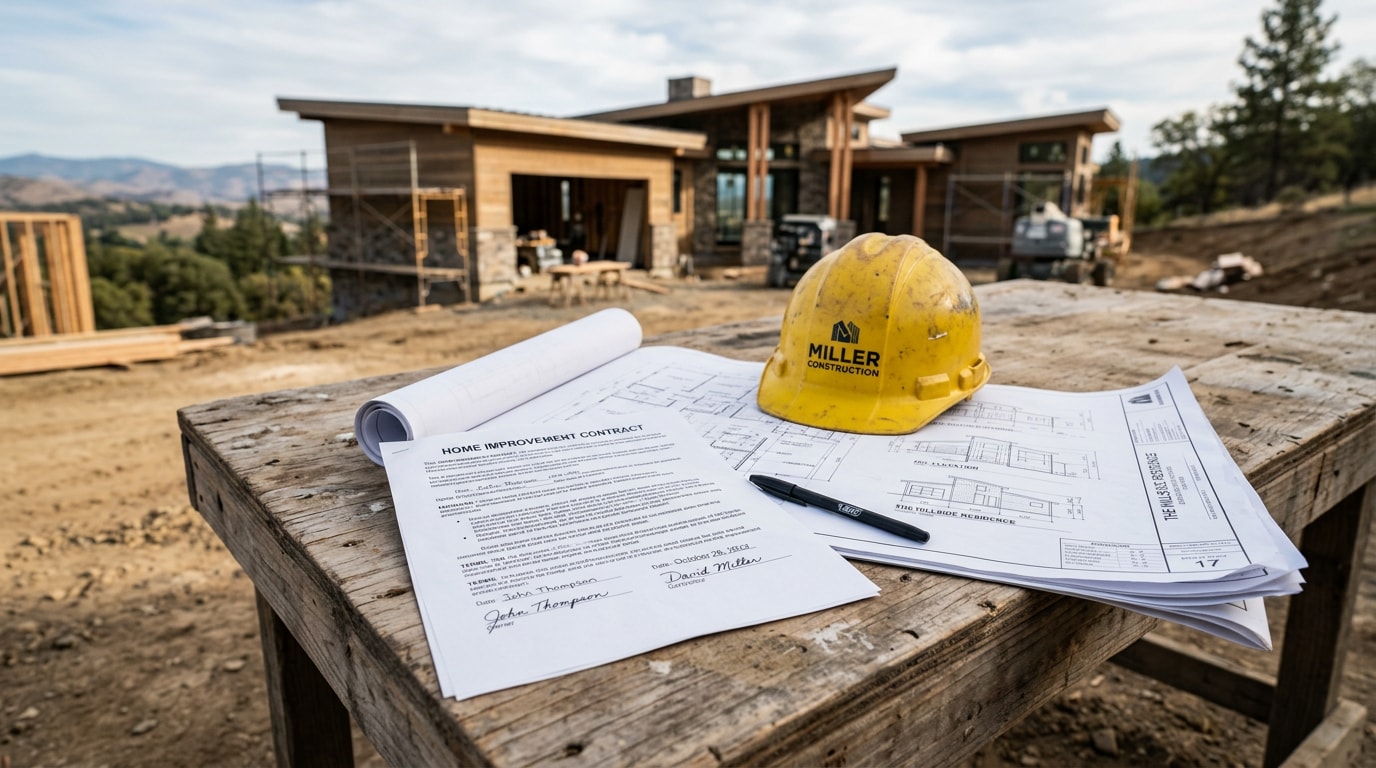
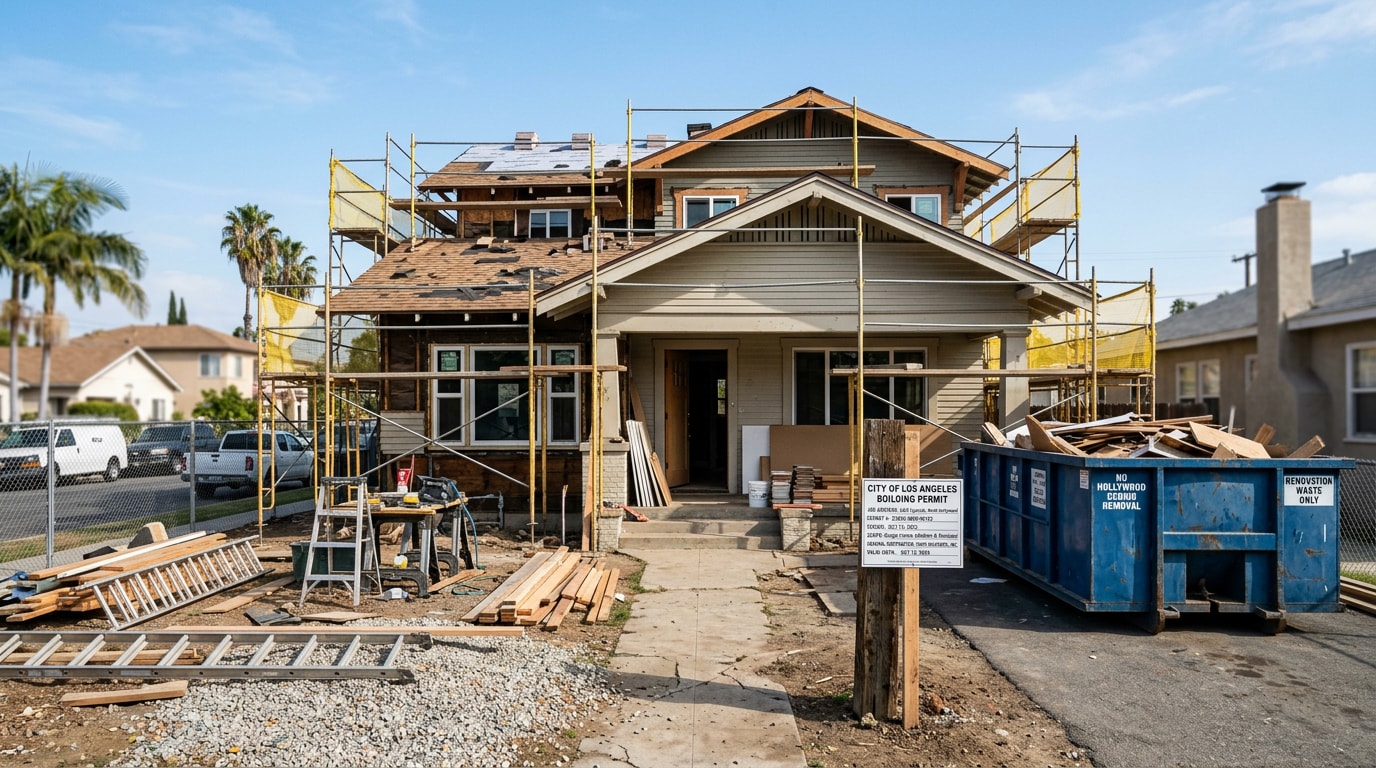
Choosing between owner builder vs general contractor in North Hollywood, CA determines who signs the permit, who absorbs liability, and how much your project really costs. One path can save on markup but demands your time and construction know-how; the other shifts risk onto a license and an insurance policy. This guide lays out both options plainly so you can pick the one that actually fits your project, not just your budget.
What Is an Owner-Builder?
An owner-builder is a property owner who takes on the responsibilities a general contractor would normally hold, either doing the work personally or hiring and supervising licensed subcontractors directly. An owner-builder is what the term indicates: a person owns the property and acts as their own general contractor on the job, and either does the work themselves or has employees (or subcontractors) working on the project.
California's building departments actually recognize three versions of this role, and most homeowners only know one of them.
- Owner-as-Worker:
you personally perform the construction work, the permit is taken out in your name and you are personally responsible for the construction management, knowledge, workmanship, and completion of the job.
- Owner-as-Contractor:
you personally act as your own General Contractor, the permit is taken out in your name and you hire California licensed sub-contractors to perform portions of the work.
- Owner-as-Employer:
you pay any unlicensed individual to perform labor on the job, which carries its own payroll and workers' compensation exposure.
Two eligibility rules trip up more North Hollywood homeowners than anything else. The work site must be their principal place of residence that they have occupied for 12 months prior to completion of the work.
The homeowner cannot construct and then sell more than two structures during any three-year period. Miss either one and your owner-builder status can be challenged after the fact, not just at the permit counter.
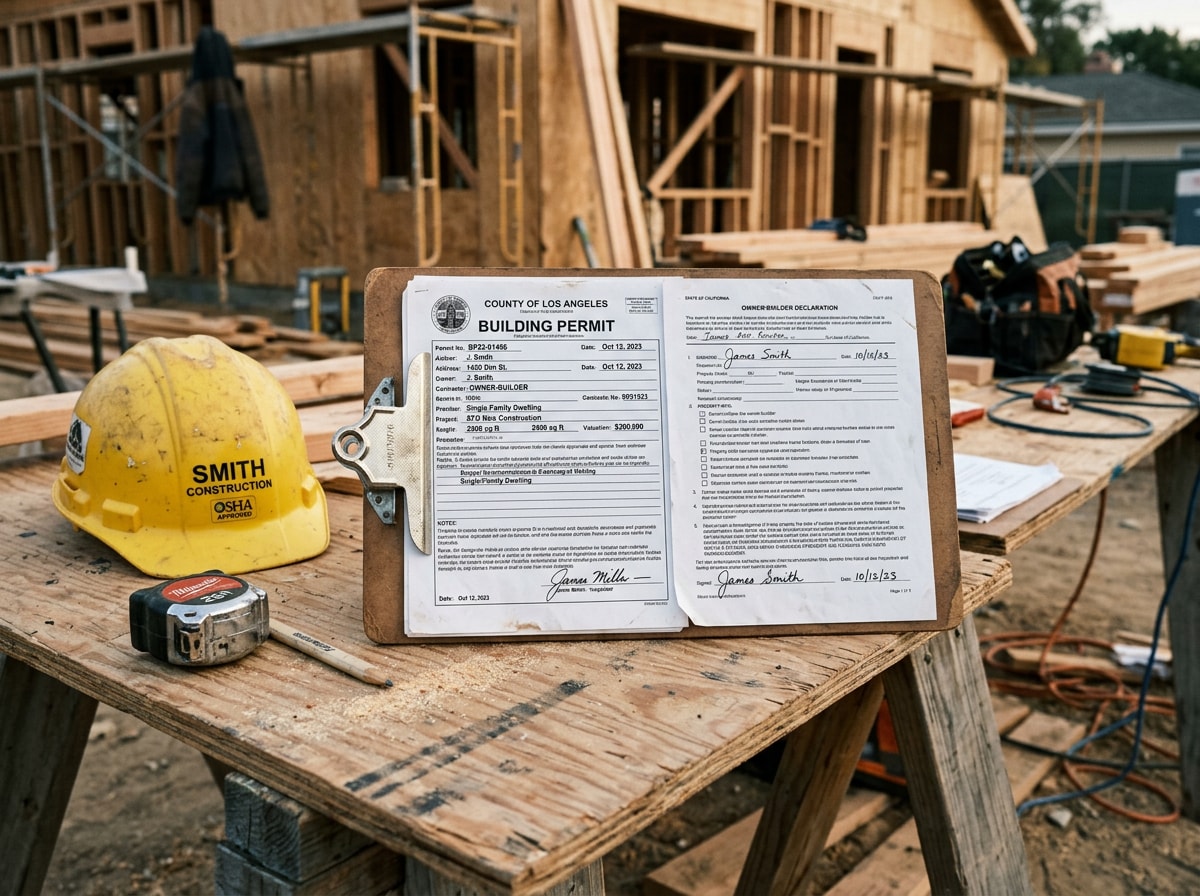
Before Los Angeles building departments issue an owner-builder permit, you also sign a declaration acknowledging the legal limits of the exemption. I understand under California Contractors' State License Law, an Owner-Builder who builds single family residential structures cannot legally build them with the intent to offer them for sale, unless all work is performed by licensed subcontractors or a licensed general contractor. Skipping this step, or signing it without understanding it, is one of the most common reasons an owner-builder permit gets delayed in the San Fernando Valley.
For many homeowners, working with a licensed general contracting team is simply the lower-friction route, but understanding the owner-builder option first helps you make an informed call.
What Is a General Contractor?
A general contractor is a licensed professional who takes on construction projects on someone else's behalf, carrying the obligations an owner-builder would otherwise hold personally. That includes hiring subcontractors, scheduling inspections, and carrying the liability that comes with running the job site.
Choosing a licensed contractor for your remodel or build shifts that responsibility off your shoulders entirely. The next section compares both roles side by side so the trade-offs are easier to weigh.
Owner-Builder vs. General Contractor: Key Differences
With a general contractor, the GC hires the subcontractors, controls the daily process, and builds project management, overhead, risk, and profit into the contract price. As an owner-builder, you hire subcontractors directly, keep visibility into pricing, approve materials and changes yourself, and manage the budget line by line.
Licensing is the other major split. A general contractor license requires meeting strict state experience and exam requirements, while an owner-builder operates under a state exemption instead of holding a license at all.
| Factor | Owner-Builder | General Contractor |
|---|---|---|
| Who controls the project | Homeowner | Licensed GC |
| Who hires subs | Homeowner directly | GC hires and manages |
| Liability/insurance | Falls on homeowner | Carried by GC's license and insurance |
| Markup or fee structure | No GC markup | Includes GC markup and overhead |
| Time commitment | High, daily involvement | Low, GC manages schedule |
| Resale restriction | Limited to two structures per three years | No resale restriction tied to license |
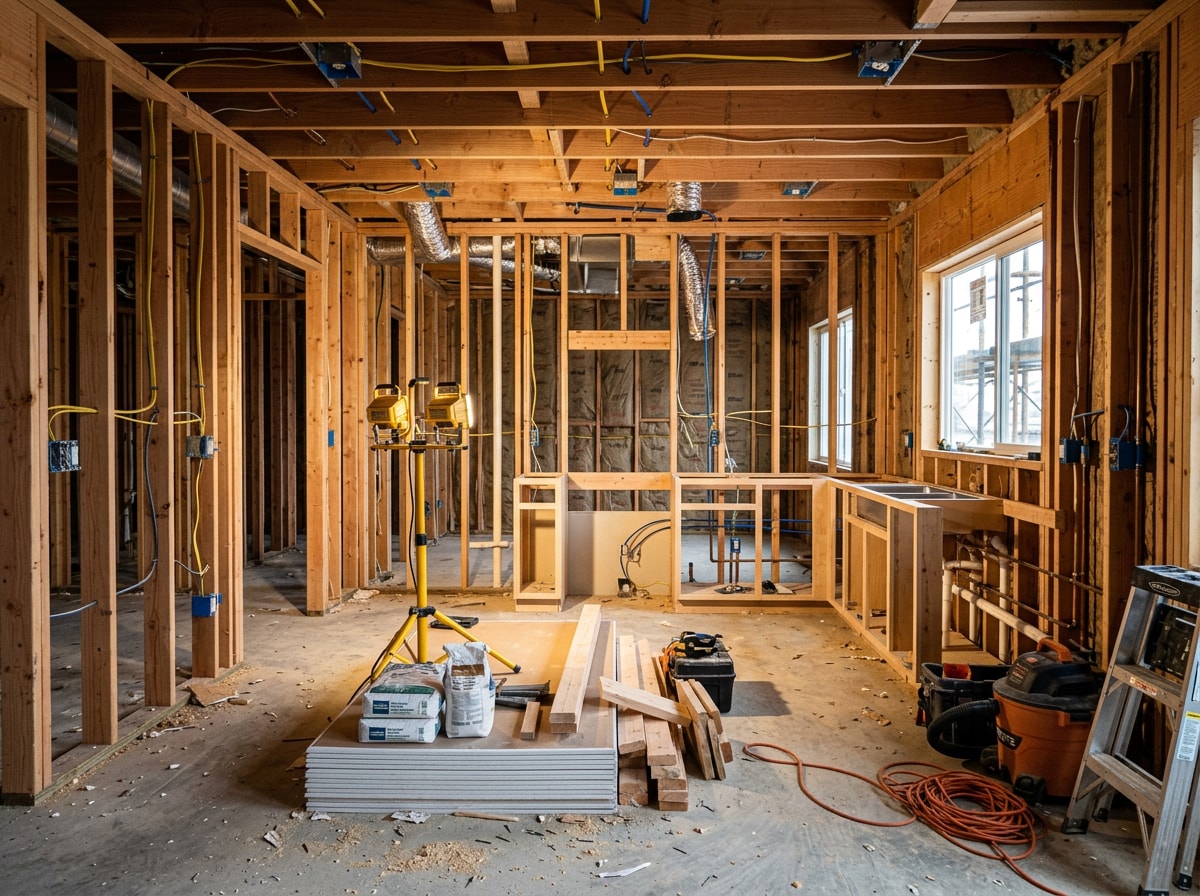
Consider a kitchen remodel in North Hollywood: an owner-builder might save on GC markup by hiring the electrician and plumber directly, but if a scheduling conflict delays drywall, the homeowner absorbs that disruption instead of a contractor contractually bound to fix it. A licensed GC would typically resolve that conflict as part of normal project management, inside the price already quoted. If you want a sense of what that markup actually buys, our breakdown of typical GC fee percentages in North Hollywood walks through real ranges by project size.
The Owner-Builder Rules Most North Hollywood Homeowners Miss
Beyond the declaration form, a few details change how an owner-builder project actually runs on the ground.
The exemption itself is written into state law, not just building department policy. An owner who builds or improves a structure on his or her property is exempt, provided none of the improvements are intended or offered for sale, or provided the owner directly contracts with licensees who are duly licensed to contract for the work of the respective trades involved in completing the project. That means the moment you pay an unlicensed person to run your electrical rough-in, you're outside the exemption, even if you own the property.
New construction adds another layer: regardless of whether you build as an owner-builder or hire a licensed GC, California's fire-sprinkler and defensible-space standards still apply to new single-family homes. Those code requirements don't go away just because you're managing the project yourself, and missing them at the plan-check stage is a common source of permit delays.
When our team fields owner-builder questions from North Hollywood homeowners, the calls almost always come in after a scheduling conflict between two trades, not before the project starts. Coordination, not the paperwork, is usually what catches people off guard.
Advantages of Being an Owner-Builder
Acting as your own general contractor can reduce costs by eliminating contractor fees and GC markup, giving you direct pricing visibility into every line item. That said, it also risks higher costs if mistakes or mismanagement creep in; a missed inspection or a poorly sequenced trade can erase savings fast.
- Direct access to subcontractor pricing with no markup layered on top
- Full control over material selection and change orders
- Line-by-line visibility into every invoice
- Flexibility to adjust scope as you go, without renegotiating a contract
The honest takeaway: owner-builder savings depend on your ability to coordinate subcontractors as well as a professional would. If that's not a strength, the "savings" can turn into rework costs quickly.
Is the Owner-Builder Path Right for You?
Ask yourself a few direct questions before deciding whether you should be your own general contractor.
- Do you have time to manage subcontractor schedules daily?
- Do you understand building codes and inspection sequencing well enough to catch errors early?
- Are you comfortable coordinating multiple trades without a project manager?
- Can you absorb the owner-builder liability if something goes wrong on site?
If you answered no to more than one, working with a licensed contractor serving the North Hollywood and San Fernando Valley area is probably the safer, less stressful path. If you'd rather compare real numbers before deciding, you can get a free estimate priced both ways, owner-builder consult and full-service build, before you file for a permit.
General Contractor License Requirements
Holding a California contractor license isn't a quick process, which is part of why the GC role carries different liability and pricing than owner-builder work. Every applicant for a contractor's license must have had, within the last 10 years immediately preceding the filing of the application, not less than four years experience as a journeyman, foreman, supervising employee or contractor in the particular class within which the applicant intends to engage as a contractor. Applicants must also pass trade and law exams before a license is issued.
This is useful context for owner-builders too: the standards homeowners agree to when signing an owner-builder declaration exist precisely because licensed contractors have already cleared a higher bar on experience, bonding, and insurance.
Owner-Builder Experience Toward a General Contractor License
Here's a detail most homeowners never hear about: the CSLB allows some applicants to use owner builder experience as a way to qualify for the 4 years journey-level experience required to get a General Contractor License.
Typically, owner-builders applying for the General Contractor license meet all the requirements except for the 4 years of journey-level experience.
If you've completed a substantial owner-builder project and are considering licensure yourself, this pathway is worth researching directly with the CSLB before you apply.
For homeowners planning a larger remodel rather than ground-up construction, our whole home remodel cost and process guide and project gallery at {{SITE_URL}}/projects show what a fully managed build looks like from permit to punch list.
FAQ
How does an owner builder differ from hiring a contractor?
As an owner-builder, you're serving as the general contractor yourself: hiring subs, managing the schedule, and signing the permit, rather than a licensed third party doing it for you.
What are the legal responsibilities of an owner builder compared to a contractor?
Owner-builders sign the permit, carry liability obligations themselves, and are legally responsible for subcontractor hiring decisions, responsibilities a licensed GC would otherwise hold under their own license and insurance.
Is it more cost-effective to be an owner builder or hire a contractor?
There's no license requirement to become an owner-builder, but construction knowledge helps avoid costly mistakes. Savings depend heavily on your experience level and how complex the project is; a simple remodel favors owner-builders more than a ground-up build does.
Is it legal to be your own general contractor in California?
Yes. California's owner-builder exemption (Business & Professions Code § 7044) lets you act as your own contractor on property you own without a contractor's license, as long as you do the work yourself (or use your own W-2 employees) and the home is not built for sale.
Can an owner-builder sell the home afterward?
Only within limits. The homeowner cannot construct and then sell more than two structures during any three-year period , and selling too soon after completion can trigger a legal presumption that the project was built for resale rather than personal use.
What are the risks of owner builder vs contractor construction?
Owner-builders face coordination headaches, direct liability exposure, and schedule risk that a licensed GC would otherwise absorb. If that sounds like more than you want to manage, request a free estimate from a licensed contracting team to compare costs before deciding.